

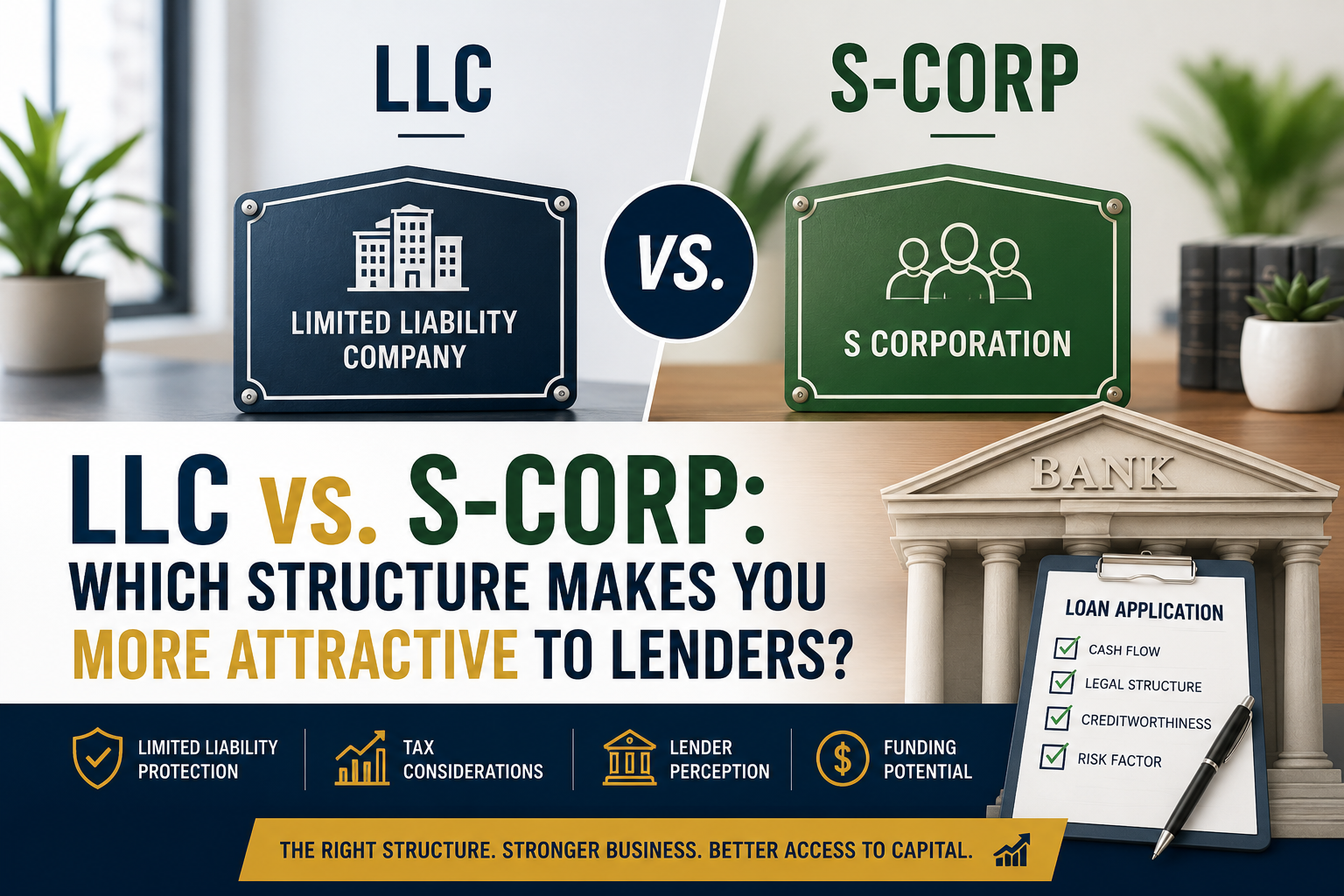
Are you launching a small business and facing the choice between forming an LLC or electing S-Corp status? While both structures offer liability protection and potential tax benefits, savvy entrepreneurs know that your decision can also influence how attractive your business appears to banks and lenders. At JDP Credit Solutions, we help business owners make strategic decisions including choosing the right business entity that set the stage for funding success.
In this post, we’ll break down the fundamental differences between LLCs and S-Corps, and explore how each structure can impact your ability to obtain loans and other types of financing. Let’s empower your growth with smart insights!
LLCs and S-Corps: Quick Definitions
What is an LLC?
A Limited Liability Company (LLC) is a flexible business entity that protects owners (known as members) from personal liability for business debts or lawsuits. LLCs are popular for their simplicity and minimal paperwork, making them a favored option among startups and solo entrepreneurs.
What is an S-Corp?
An S Corporation (S-Corp) is not a separate entity, but rather a federal tax election available to LLCs and C corporations. S-Corps allow business profits (and some losses) to pass directly to owners’ personal tax returns avoiding double taxation. However, S-Corps face stricter operational rules, such as limits on the number and type of shareholders and requirements related to compensation and distributions.
Key Differences That Matter to Lenders
Whether you’re seeking a business line of credit, a term loan, or an SBA loan, lenders scrutinize your business structure. Here’s how LLCs and S-Corps compare in the eyes of credit and funding institutions:
1. Legal Standing and Perceived Stability
- LLCs: Offer liability protection, but may be seen as less formal, especially single-member LLCs.
- S-Corps: Typically viewed as a more established, formal entity due to stricter adherence to corporate formalities (board meetings, minutes, etc.).
Lender Impact: S-Corps may project a greater sense of permanence and professionalism, especially if you can provide corporate records, making lenders more comfortable extending credit.
2. Financial Transparency and Record-Keeping
- LLCs: Flexible accounting and tax options, but some small LLCs mix personal and business funds, which is a red flag for banks.
- S-Corps: Required to maintain separate financials, detailed payroll records, and annual shareholder meetings.
Lender Impact: Clear, consistent financials make it easier for lenders to assess your creditworthiness. S-Corp requirements may force better discipline in this area, which banks love.
3. Tax Reporting and Profits
- LLCs (default): Pass-through taxation with little required separation between personal and business finances (unless electing corporate tax treatment).
- S-Corps: Profits and losses pass through to shareholders, but owners who work for the business must pay themselves a “reasonable salary.”
Lender Impact: S-Corps demonstrate predictable income and payroll, providing lenders with clearer insights into your business’s cash flow and reliability.
4. Owner Compensation and Creditworthiness
- LLCs: Owners can take draws at will; distributions are flexible but often irregular.
- S-Corps: Owners typically pay themselves a salary (reported on W-2s), and may also take additional dividends.
Lender Impact: Lenders like to see regular, reported income (via payroll) when verifying ability to repay loans. S-Corp owner salaries, coupled with clean financials, can aid in documentation and strengthen your loan application.
How Banks Evaluate Your Business Structure
Lenders typically assess:
- Business Longevity: S-Corps often suggest a more established business.
- Financial Documentation: S-Corps are forced by law to keep better records, which streamlines loan underwriting.
- Separation of Finances: Blurring business and personal accounts is a red flag S-Corps make separation standard.
- Tax Returns: Both LLCs and S-Corps must provide business tax returns. However, W-2s from S-Corp salaries may expedite the review process.
Pro Tip from JDP Credit Solutions: Regardless of your structure, always maintain clean, audited books and keep personal and business finances separate. This is the #1 way to make your business more creditworthy.
Case Study: Miami Small Biz Owner Seeks Funding
Let’s look at a typical scenario: Ava, a Miami-based marketing consultant, wants to expand her business and apply for an SBA loan. She started as a single-member LLC and did her own bookkeeping, occasionally mixing business and personal expenses.
Outcome as an LLC: When approached for funding, her bank flagged unclear accounting records and a lack of payroll documentation. The review process stalled.
Ava’s Shift to S-Corp: Under advice, Ava elected S-Corp status, started paying herself a regular salary, filed professional business tax returns, and opened a dedicated business account. On her next funding application, the bank appreciated the clear paper trail and approved her loan.
LLC vs. S-Corp: Pros and Cons for Credit Applicants
The Bottom Line: What Should You Choose?
- LLCs are great for simplicity and flexibility, but single-member LLCs can struggle with lender scrutiny if financials are not pristine.
- S-Corps offer a more professional presence, mandatory financial discipline, and typically provide lenders with the confidence they need to approve credit especially for growing businesses or those seeking sizable loans.
At JDP Credit Solutions, our Miami team helps you weigh your options. We walk you through entity selection, credit repair, and even help with business funding applications all tailored to your financial goals.
Frequently Asked Questions
Q: Can an LLC get approved for loans just as easily as an S-Corp?
A: Yes, especially if it has strong records, separate finances, and a solid business history. However, an S-Corp structure often makes it easier to submit clean, lender-friendly documentation.
Q: Does switching to an S-Corp guarantee approval?
A: No entity guarantees funding. But organizing your business as an S-Corp can make underwriting smoother and improve your perceived credibility with banks.
Q: Should I switch if I’m considering applying for larger funding?
A: It’s worth evaluating. Book a consultation at JDP Credit Solutions, and we’ll review your unique situation and goals.
Conclusion
Choosing an LLC or S-Corp for your business isn’t just about taxes or paperwork it directly affects your ability to secure funding. By understanding what banks look for and tailoring your business structure accordingly, you can increase your chances of accessing the capital you need to grow.
Ready to strengthen your financial future? Visit JDP Credit Solutions for expert advice, credit repair, business funding, and all the financial education tools to position your company and yourself for lasting success.
Empowering entrepreneurs every step of the way because your business deserves the best foundation possible!