

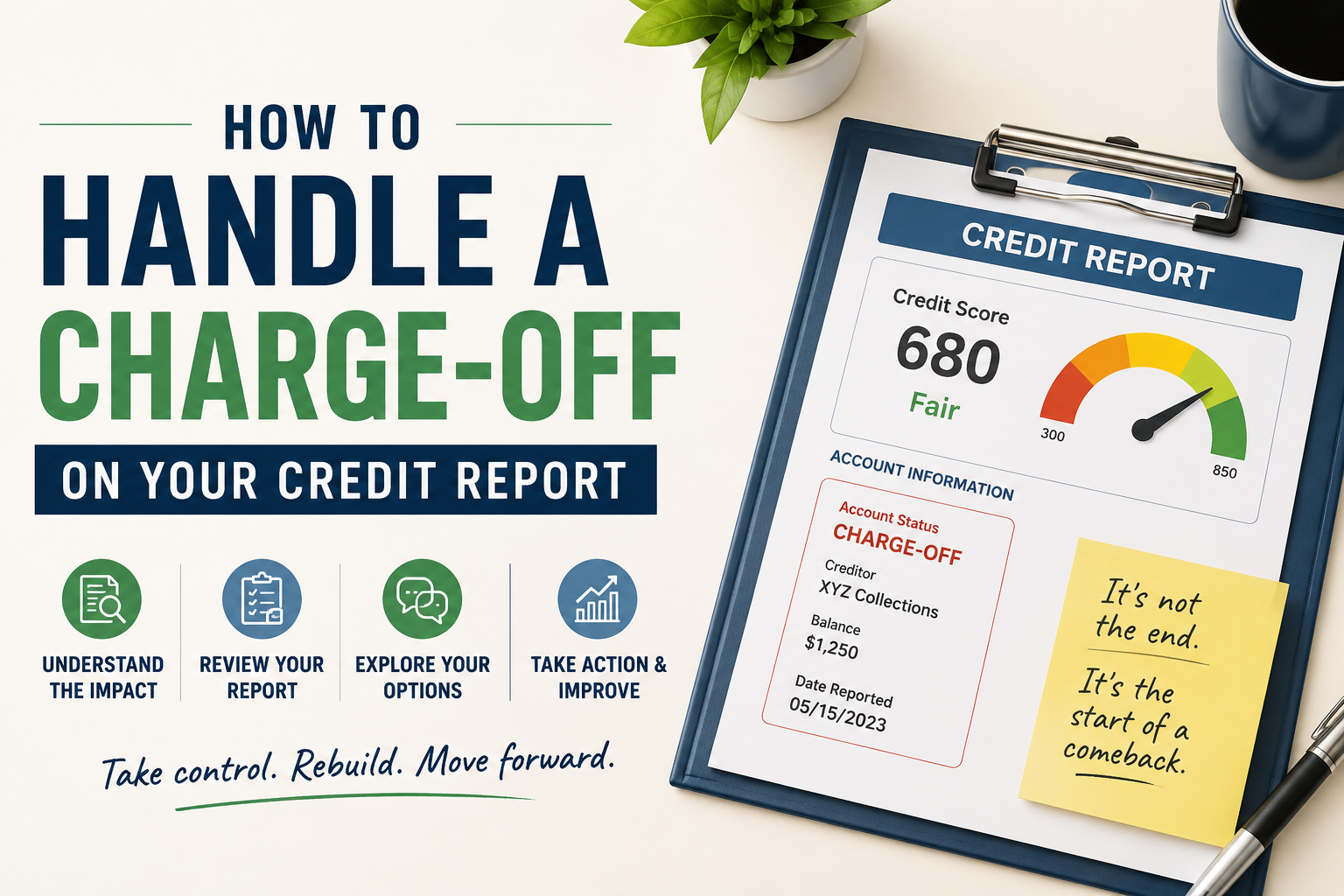
A charge-off can feel like a devastating mark on your credit report, but it’s not the end of your financial story. At JDP Credit Solutions, we specialize in helping individuals and small business owners reclaim their credit and achieve their financial goals even after setbacks like charge-offs. In this educational guide, you’ll learn exactly what a charge-off is, how it impacts you, and actionable steps you can take to address it effectively.
What Is a Charge-Off?
A charge-off occurs when a creditor classifies a debt as unlikely to be collected, typically after six months of nonpayment. Instead of pursuing the debt directly, the creditor “charges off” the account, often selling it to a collection agency. This doesn’t mean you’re off the hook you still owe the debt, and the negative entry remains on your credit report for up to seven years.
Why does this matter?
A charge-off is one of the most damaging entries for your credit score. It signals to future lenders that you failed to pay as agreed, making it harder to qualify for loans, mortgages, or even rental applications.
Step 1: Confirm the Accuracy of the Charge-Off
Before you take any action, obtain a free copy of your credit report from each of the three major bureaus (Equifax, Experian, and TransUnion). Scrutinize the charged-off account for:
- Correct personal information
- Correct balances and account numbers
- Accurate dates of first delinquency
If you spot errors or inconsistencies, you have the right to dispute the entry. This could result in its removal if the creditor can’t verify the debt.
Pro Tip: Always keep records of your correspondence and supporting documentation for disputes.
Step 2: Understand the Impact on Your Credit
A charge-off can reduce your credit score by 50 to 150 points or more, depending on your overall credit profile. It also remains visible for seven years from the date of first delinquency.
Consequences include:
- Higher interest rates on future credit
- Difficulty getting approved for new credit or loans
- Obstacles renting or securing new services
Step 3: Decide How to Address the Charged-Off Account
There are several strategies for handling a charge-off:
1. Pay It Off in Full
Paying the full amount will update your credit report to reflect a paid charge-off, which can be viewed more favorably by potential lenders even though the charge-off status remains.
2. Negotiate a Settlement
Often, creditors or collection agencies are willing to accept less than the full amount owed. You can:
- Offer a lump-sum payment in exchange for settling the debt
- Request a “pay-for-delete” agreement, in which the creditor or collector agrees (in writing!) to remove the charge-off from your credit report upon payment. Note: Not all creditors agree to this, but it’s worth requesting.
3. Dispute Inaccurate Information
If the details are inaccurate, you can dispute the charge-off with the credit bureaus. If the creditor cannot verify the debt or the error, the entry must be corrected or removed.
Step 4: Follow Up and Document Everything
After reaching a resolution, always:
- Obtain written confirmation of your agreement or settlement
- Ensure the creditor or collection agency reports the update to the credit bureaus
- Check your credit reports after 30-60 days to make sure the account status is updated
Step 5: Rebuild Your Credit Post-Charge-Off
Recovery takes time, but you can start improving your financial standing right away:
- Pay all bills on time: Payment history is the largest factor in your credit score
- Lower your credit utilization: Try to keep your credit card balances below 30% of your limits
- Consider credit-builder loans or secured credit cards
- Limit new credit inquiries
Over time, good financial habits will overshadow past mistakes, and your credit score will gradually improve.
Frequently Asked Questions About Charge-Offs
Q: Can a charge-off be removed from my credit report early? A: Only if there’s an error or you successfully negotiate a pay-for-delete. Otherwise, it stays for seven years.
Q: Should I pay a creditor or the collection agency? A: Verify who owns the debt. If it was sold, pay the collection agency. Always get agreement details in writing before paying.
Q: Will paying off a charge-off boost my credit score? A: It can help by showing responsibility, but the account won’t disappear immediately. Over time, a paid charge-off will look better than unpaid.
How JDP Credit Solutions Can Help
At JDP Credit Solutions, we’ve helped countless Miami residents and business owners tackle charge-offs and restore their financial credibility. Our services include:
- Comprehensive credit repair strategies
- Dispute assistance for reporting inaccuracies
- Negotiations with creditors and collection agencies
- Personalized financial education so you don’t make the same mistake twice
If you need more guidance or want tailored help restoring your credit, visit our website or contact our Miami office today.
Final Thoughts
A charge-off on your credit report is a significant hurdle, but with careful action and the right support, it’s not insurmountable. By confirming the accuracy, making informed decisions about payment, and practicing good credit habits, you can regain control of your financial life. And remember, expert help is always available from professionals like JDP Credit Solutions because everyone deserves a second chance at financial freedom.