

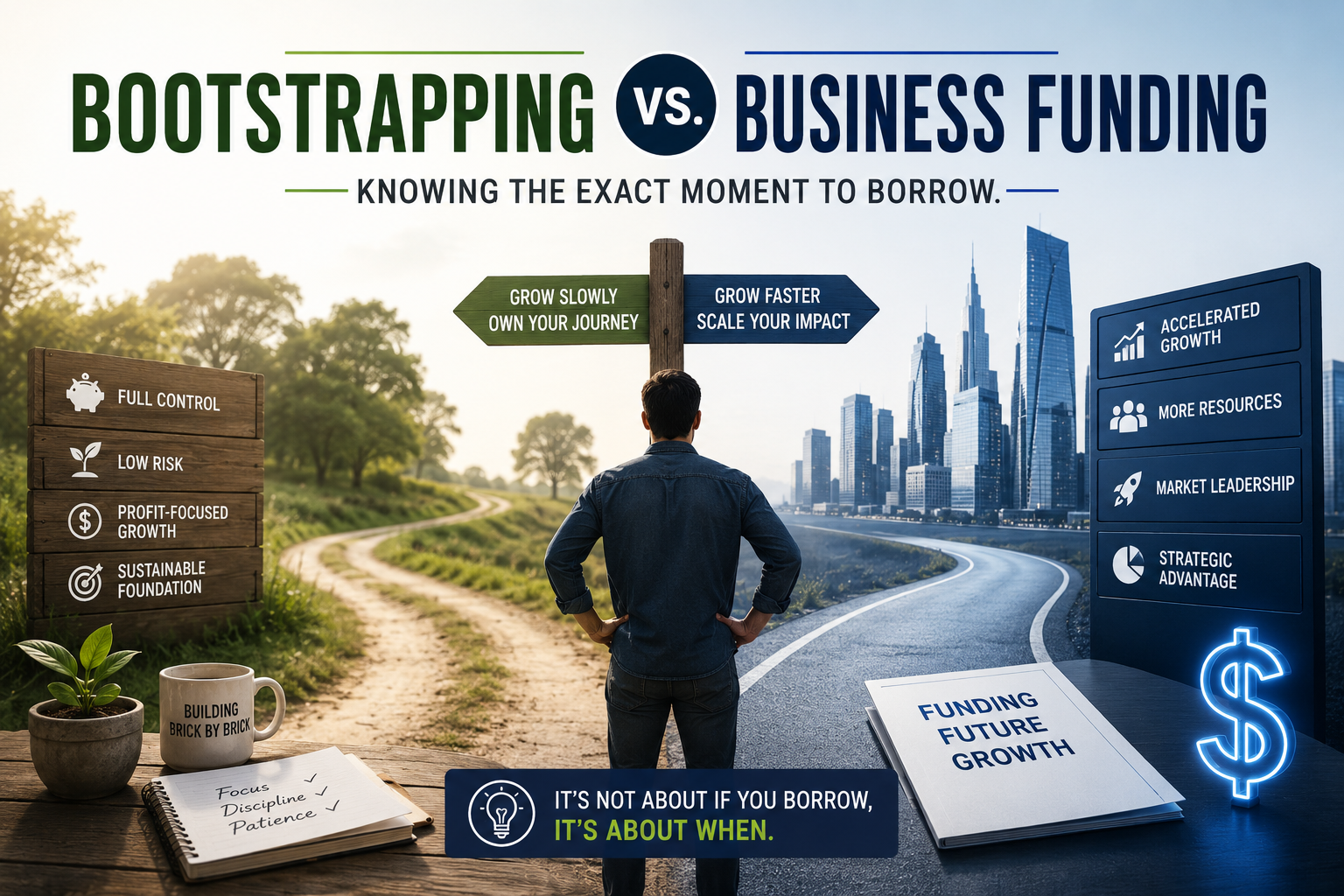
Starting and growing a small business is an exhilarating journey, but choosing how to finance it is one of the most crucial decisions an entrepreneur will make. Should you bootstrap and rely solely on your own resources, or is there a point where borrowing funds becomes not just beneficial, but necessary? At JDP Credit Solutions, we empower individuals and business owners to make informed financial choices. In this educational guide, we’ll help you understand the differences between bootstrapping and business funding, alongside practical advice for recognizing when it’s time to seek financial support.
What is Bootstrapping?
Bootstrapping means starting and growing your business using your own personal savings or the revenue your business generates, without seeking external investment or loans. It’s a strategy favored by those who wish to maintain complete control and avoid debt.
Key Benefits of Bootstrapping
- Ownership & Control: You retain full ownership and make all the decisions regarding your business operations and growth.
- Resourcefulness: Bootstrapping encourages frugality, efficiency, and creative problem-solving.
- No Repayment Pressure: Without outside loans or investors, you don’t have to worry about interest rates or repayment schedules.
Common Challenges of Bootstrapping
- Slow Growth: Relying only on internal cash flow can restrict how quickly your business can expand.
- Personal Financial Risk: You risk your own savings, assets, and potentially your credit if the business doesn’t succeed.
- Limited Reach: It may be hard to hire staff, invest in marketing, or expand your product lines without additional resources.
What is Business Funding?
Business funding means obtaining financial resources from outside your company whether through loans, credit lines, investors, or grants. Many small business owners turn to funding sources as their needs evolve.
Types of Business Funding
- Bank Loans and SBA Loans: Traditional loans offer lump sums with structured repayment plans, often secured by collateral.
- Business Credit Lines: Flexible access to funds as needed, which you pay interest on only when used.
- Angel Investors & Venture Capital: Exchange equity for investment, best suited to scalable, high-growth startups.
- Grants: Non-repayable funds from government and nonprofit sources, often competitive and niche-specific.
- Alternative Lenders: Online platforms and fintech lenders that may offer easier qualification, but sometimes at higher interest rates.
Advantages of Seeking Funding
- Rapid Expansion: Access to capital allows you to invest in technology, marketing, staff, and inventory.
- Leverage Opportunities: Time-sensitive opportunities (like a bulk-purchase discount or new market launch) can be seized.
- Credit Development: Using business credit responsibly helps build your business credit profile for the future.
The Risks of Borrowing Prematurely
While business funding can be transformative, borrowing too early or too much can create stress and jeopardize your business:
- Debt Burden: Regular loan repayments can strain cash flow, especially for businesses not yet profitable.
- Credit Risks: Mishandling loans can damage your business and personal credit, affecting your future options.
- Loss of Control: Using investors means you’ll share your profits and possibly cede some decision-making control.
When is the Right Moment to Borrow?
As a founder, determining the precise moment to borrow isn’t an exact science but there are some clear cues that indicate your business may be ready for, or even require, outside funding.
Signs You’re Ready for Business Funding
- Market Demand Exceeds Capacity: If more clients or customers want your product or service than you can currently provide, but you lack the funds to scale up, targeted funding can help you capture these opportunities.
- Clear ROI on Investment: If you’ve identified an opportunity such as an equipment upgrade or marketing campaign that projects a clear return on investment, it’s a strong justification for responsible borrowing.
- Established Revenue Streams: Lenders are more likely to support businesses with consistent revenue and cash flow, making it easier to qualify for favorable terms.
- Well-Defined Business Plan: Having robust plans and financial projections demonstrates you’ve thought through how borrowed funds will be used and repaid.
- Personal Financial Stability: Strong personal and business credit, cash reserves, and a healthy balance sheet suggest you’re in a good position to assume, manage, and repay debt.
When Bootstrapping Might Be Better
- Early Stage/Product Validation: If your product or service is untested, it often makes sense to rely on bootstrapping until you’ve validated demand.
- Limited Financial Literacy: If you aren’t yet comfortable with financial statements, projections, or credit management, consider delaying borrowing while you educate yourself (resources like ours at JDP Credit Solutions can help).
- Uncertain Business Model: When your business’s long-term viability is unclear, it’s typically safer to avoid debt.
Case Study: A Miami Success Story
Consider the journey of Maria, a Miami-based salon owner, who started her business with modest savings and elbow grease. For the first year, she bootstrapped reinventing furniture, negotiating low-cost suppliers, and operating with minimal staff. As demand grew, Maria saw that hiring two new stylists and investing in high-quality equipment could double her monthly revenue. Using her established positive cash flow and credit history, she secured a business loan with favorable terms and saw her salon flourish.
Maria’s story reflects a strategic transition: she bootstrapped to validate her business and reduce risk, then borrowed at the perfect moment to expand wisely.
How to Prepare Before You Seek Funding
If you believe you’re approaching the moment to borrow, heed these important preparation steps:
- Clean Up Your Personal and Business Credit: Lenders review credit closely. Address any inaccuracies and pay down existing obligations. JDP Credit Solutions provides expert credit repair services to help you present your best financial self.
- Organize Financial Records: Have thorough, up-to-date financial statements, tax returns, and business plans ready for potential lenders or investors.
- Understand Your Funding Options: Not all funding is created equal. Assess the pros and cons of loans, credit lines, and alternative finance before committing.
- Calculate Your True Funding Needs: Borrow only what you need, and develop realistic projections on how and when you will repay.
- Get Professional Guidance: Utilize resources, educational tools, or consultation services—such as those from our experts at JDP Credit Solutions—to navigate the sometimes-confusing world of business funding.
Conclusion: Empowering Your Financial Future
Whether you choose to bootstrap, borrow, or embrace a combination of both, the keys are education, planning, and timing. By understanding your business’s needs and the full spectrum of financial options, you can make informed decisions that support sustainable growth. At JDP Credit Solutions, we’re dedicated to helping small business owners in Miami and beyond unlock their financial potential, improve credit, and gain access to the right funding at the right time.
Ready to find your perfect financing moment? Contact us at JDP Credit Solutions to empower your credit and business funding journey.
About JDP Credit Solutions: Based in Miami, FL, JDP Credit Solutions helps individuals and small business owners improve their credit, access funding, and reach their financial goals with proven strategies and tailored support.