

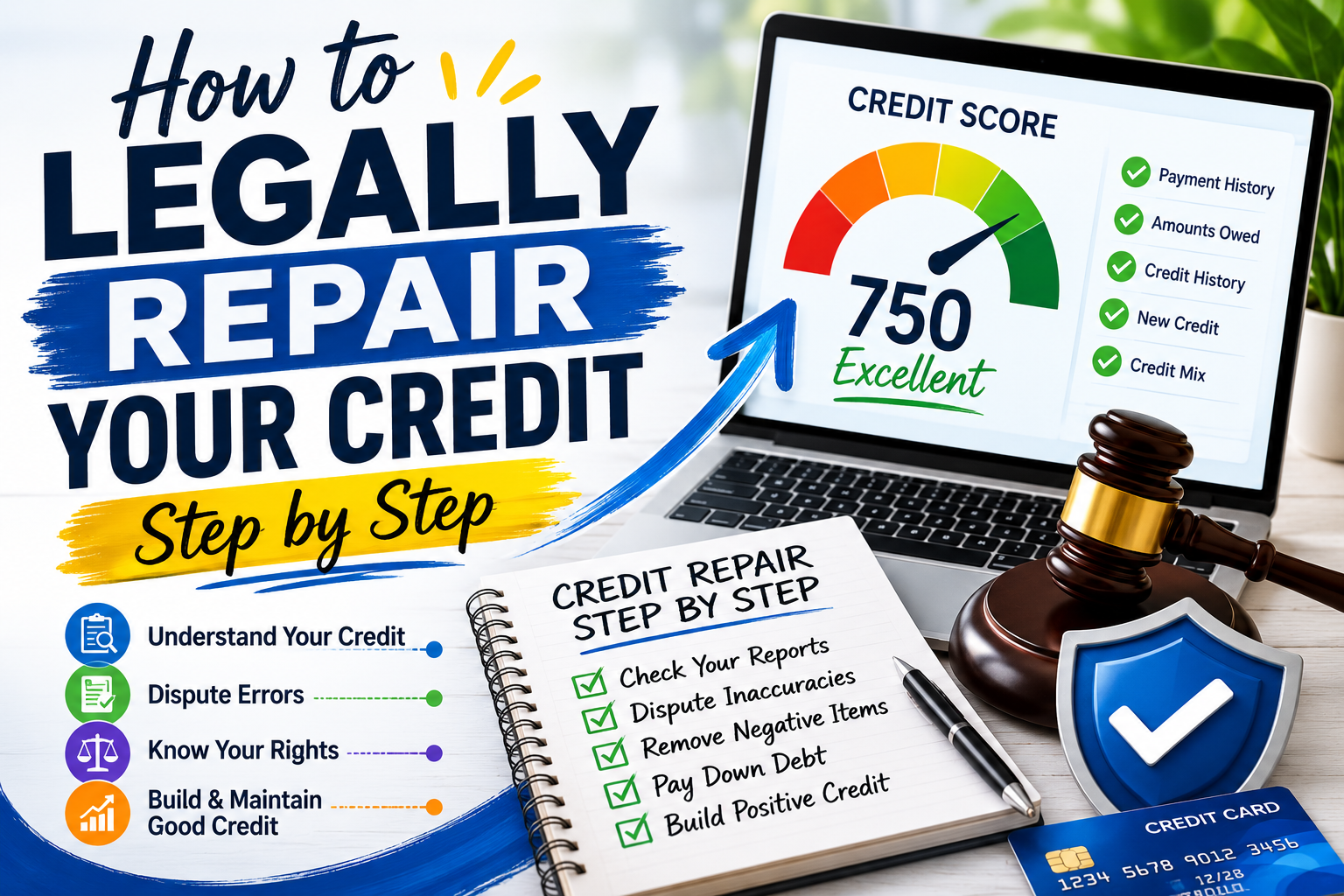
When it comes to financial health, your credit score plays a pivotal role in unlocking opportunities whether it’s getting approved for a mortgage, securing a business loan, or simply qualifying for better rates on insurance. Yet, many individuals and small business owners struggle with damaged credit and aren’t sure where to start. If you’re ready to make a change, this comprehensive step-by-step guide will walk you through the legal process of repairing your credit.
Written with insights from JDP Credit Solutions of Miami, FL experts who help people improve their credit scores and access funding this guide aims to equip you with knowledge, empowerment, and actionable steps to rebuild your financial future.
Table of Contents
- Why Good Credit Matters
- The Legal Foundations of Credit Repair
- Step 1: Obtain Your Credit Reports
- Step 2: Review Your Reports for Errors
- Step 3: Dispute Inaccuracies
- Step 4: Pay Down Debts Strategically
- Step 5: Establish Positive Credit Habits
- Step 6: Consider Professional Credit Repair Assistance
- Frequently Asked Questions
- Conclusion & Next Steps
Why Good Credit Matters
Your credit score is a numerical reflection of your financial trustworthiness. Lenders, landlords, and even some employers check your credit to gauge the risk of lending to or hiring you. Poor credit can result in higher interest rates, difficulty accessing loans, or being denied credit entirely. On the other hand, good credit opens doors to better financial opportunities and peace of mind.
The Legal Foundations of Credit Repair
The Fair Credit Reporting Act (FCRA) gives you, the consumer, the right to an accurate and fair credit report. This law provides benchmarks for disputing any errors or outdated information on your credit record. It’s legal and your right to take steps to correct inaccurate or misleading items impacting your credit score.
Step 1: Obtain Your Credit Reports
Every American can request a free credit report from each of the three major bureaus Equifax, Experian, and TransUnion once a year through AnnualCreditReport.com. Review all three reports because errors may not appear uniformly across all agencies.
Pro Tip: Download each report and store them securely for your records.
Step 2: Review Your Reports for Errors
Once you have your reports, go through each line item carefully. Look for:
- Misspelled names or incorrect addresses
- Accounts that don’t belong to you
- Incorrect account statuses (like reported late payments you made on time)
- Outdated negative information (in most cases, negative items must be removed after 7 years)
Mark every single item that seems inaccurate, incomplete, or suspicious.
Step 3: Dispute Inaccuracies
You have the right to dispute inaccurate or unverifiable information for free. Each credit bureau has an online dispute process, or you can mail a dispute letter.
How to File a Dispute:
- Identify the item: Clearly state which item you are disputing.
- Explain the error: Provide a concise explanation (e.g., “This account does not belong to me”).
- Provide supporting documentation: Attach any documents that back up your claim.
- Submit the dispute: File online or send via certified mail to the credit bureau.
Bureaus are required to investigate your claim within 30 days. If found inaccurate, the item must be corrected or removed.
Step 4: Pay Down Debts Strategically
One key to credit repair is lowering your credit utilization ratio (the amount you owe versus your total available credit). Focus on:
- Paying off high-interest, high-balance credit cards first (the debt avalanche method)
- Keeping balances below 30% of your available credit
- Making at least the minimum payment on all bills late payments heavily impact your score
Step 5: Establish Positive Credit Habits
Improving your credit isn’t only about removing errors; it’s also about building a strong, positive credit history. Some practical actions include:
- Pay all bills on time: Payment history makes up 35% of your FICO score
- Avoid unnecessary hard inquiries: Too many applications for credit can lower your score
- Consider a secure credit card: If rebuilding, secure cards (backed by a deposit) can help you re-establish positive patterns
- Mix it up: Installment loans (like auto or student loans) and revolving credit (like credit cards) together help build a stronger score
Step 6: Consider Professional Credit Repair Assistance
While DIY credit repair is possible, the process can be overwhelming and time-consuming. Professional credit repair services, such as those offered by JDP Credit Solutions, can:
- Review and analyze your credit reports
- Identify negative items impacting your score
- Professionally dispute inaccurate, outdated, or unverifiable information
- Advise on strategies to build and maintain strong credit moving forward
JDP Credit Solutions in Miami specializes in empowering individuals and small business owners to take charge of their credit situation, providing not just repair services but ongoing education and funding solutions.
Frequently Asked Questions
Is Credit Repair Legal?
Absolutely. You have a legal right to dispute inaccurate information on your credit reports per the Fair Credit Reporting Act (FCRA).
How Long Does Credit Repair Take?
Some changes like the removal of inaccurate negative items can happen within 30-45 days. Building positive credit and seeing significant score improvements typically takes several months or more of consistent effort.
Can I Do This Myself, or Do I Need Professional Help?
You can certainly initiate credit repair on your own, but many find that having expert guidance accelerates the process and ensures nothing gets missed.
Conclusion & Next Steps
Repairing your credit legally is achievable with diligence, know-how, and sometimes a bit of extra help. Start by understanding your rights, pulling your credit reports, and methodically addressing errors and debts. Building new, positive credit habits will carry you through for years to come.
If you feel overwhelmed by the process or want experienced professionals to advocate for you, consider reaching out to JDP Credit Solutions in Miami. It’s never too late to take control of your credit and your financial future.
Ready to repair your credit? Schedule a consultation with JDP Credit Solutions and let us help you on your journey to financial empowerment.