

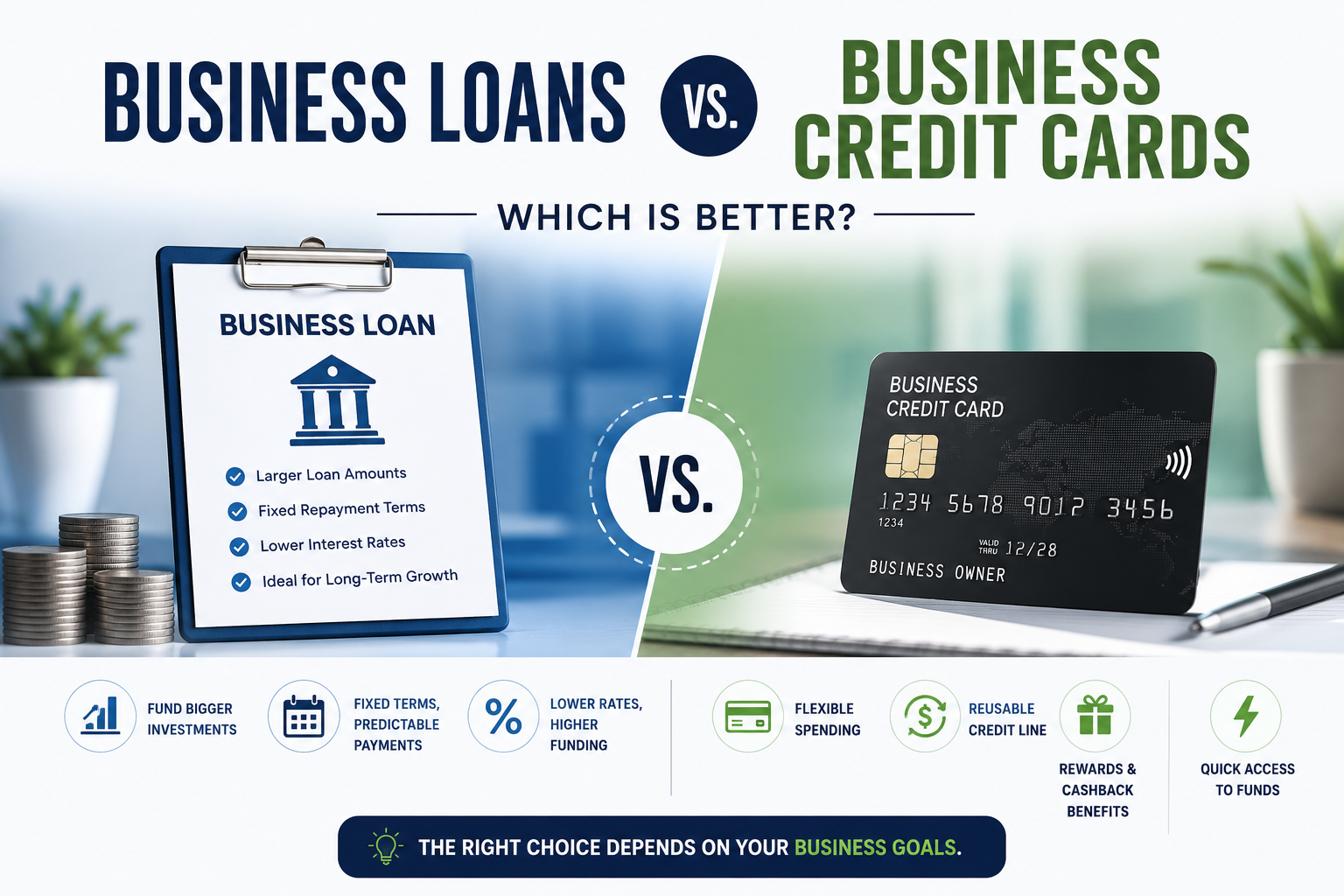
In the world of small business finance, access to credit is often crucial for growth, stability, and opportunity. But with so many financing options available, how do you decide whether a business loan or a business credit card is the right choice for your needs? At JDP Credit Solutions, we’ve helped countless entrepreneurs navigate these decisions. In this guide, we’ll break down the pros, cons, and best use cases for both business loans and business credit cards, so you can make an informed decision for your business’s future.
Understanding the Basics
Before diving into the comparison, let’s define what each option entails.
What Is a Business Loan?
A business loan is a lump sum of money provided by a bank, credit union, or alternative lender, which is repaid with interest over a set period. Business loans vary in terms, amounts, interest rates, and requirements, and they can be secured (backed by collateral) or unsecured.
Common Types of Business Loans Include:
- Term loans (short- and long-term)
- SBA loans (backed by the U.S. Small Business Administration)
- Lines of credit
- Equipment or inventory loans
What Is a Business Credit Card?
A business credit card is a revolving line of credit, similar to a personal credit card but intended for business use. You can make purchases up to your credit limit, carry a balance from month to month (with interest charges on unpaid balances), and pay off your debt as cash flow allows.
Comparing Business Loans and Business Credit Cards
Both options provide access to funding, but they differ in structure, use cases, and impact on your business’s financial health.
1. Flexibility of Funds
- Business Loans: Typically, business loans provide a lump sum disbursed upfront. They are best suited for large, planned expenses, such as purchasing equipment, expanding to a new location, or making bulk inventory purchases.
- Business Credit Cards: Offer a revolving line of credit, allowing you to borrow and repay funds repeatedly. This makes them ideal for everyday expenses, managing cash flow, or emergencies.
2. Approval Process
- Business Loans: The approval process is often more rigorous, requiring documentation of business finances, a solid business plan, credit history, and sometimes collateral. It can take weeks (or longer) for approval and funding.
- Business Credit Cards: Applications are typically faster and require less documentation, making it easier for startups or businesses with limited credit history to qualify.
3. Cost & Interest Rates
- Business Loans: Tend to offer lower interest rates compared to credit cards, especially for borrowers with strong credit. Interest is often fixed and predictable.
- Business Credit Cards: Usually carry higher interest rates, especially on revolving balances. However, they may offer introductory 0% APR periods, which can be leveraged if you repay the balance during the promotional period.
4. Repayment Terms
- Business Loans: Loans come with set repayment schedules: monthly payments over a fixed term (e.g., three or five years). This helps with budgeting but can strain cash flow if revenue fluctuates.
- Business Credit Cards: Repayments are flexible; you can pay as little as the minimum or as much as the full balance. This flexibility can be helpful but also risky if balances grow unchecked.
5. Credit-Building Potential
Both products can help your business build its credit profile if used responsibly. Timely payments are reported to business credit bureaus, which can improve your creditworthiness and allow access to more funding options in the future.
6. Rewards & Perks
- Business Credit Cards: Many cards offer cash back, travel perks, or points on spending, adding extra value for regular business expenses.
- Business Loans: Typically offer no fringe benefits aside from the capital itself.
When Should You Choose a Business Loan?
Consider a business loan if you need:
- Large amounts of capital for a specific, defined need (expansion, equipment, real estate).
- Predictable, structured repayments to help cash flow planning.
- Lower overall interest costs, especially if you qualify for favorable rates.
Example use-case: A Miami-based restaurant plans to open a second location. The owner needs $150,000 for build-out, equipment, and staffing. A business loan provides the lump sum capital and predictable monthly payments.
When Should You Choose a Business Credit Card?
Choose a business credit card if you need:
- Ongoing access to smaller amounts of credit for operational expenses (supplies, travel, utilities).
- Flexible repayments to manage short-term cash flow fluctuations.
- Rewards or cash back to maximize regular spending.
- Quick access to funding without lengthy approvals.
Example use-case: A freelance graphic designer in Miami uses a business credit card for software subscriptions, equipment, and travel. The card’s rewards help offset expenses, and balances are paid in full each month to avoid interest.
Potential Risks to Consider
- Over-leveraging: Easy access to funds especially with credit cards can lead to overspending and high debt levels.
- Credit impact: Missed payments or high credit utilization can harm your business and personal credit ratings.
- Collateral risk: Some loans require personal guarantees or collateral, putting your assets at risk if you default.
How JDP Credit Solutions Can Help
At JDP Credit Solutions, we empower Miami’s small business owners to make smart financing decisions. Our expert team will help you:
- Assess your business’s credit health
- Explore personalized funding options
- Identify the best mix of loans and credit cards to suit your goals
- Improve your credit profile for better access to future funding
“I started JDP Credit Solutions after overcoming my own credit struggles and realizing the true impact of good credit. Now, our mission is to empower others to build strong financial futures.”
Ready to learn more? Visit our website or contact us today for a free consultation on your business financing needs!
Conclusion: Which Is Better, Loans or Credit Cards?
The choice between business loans and business credit cards depends on your business’s size, goals, funding needs, and financial discipline. Established businesses planning significant investments may benefit more from a structured loan, while startups or businesses needing daily liquidity may prefer the flexibility of a credit card.
In many cases, a combination of both carefully managed provides the best balance of flexibility and financial health. Whatever you choose, responsible borrowing and consistent payments will help set your business up for lasting success.
Need expert guidance? Contact JDP Credit Solutions today to take the next step toward achieving your business ambitions.