

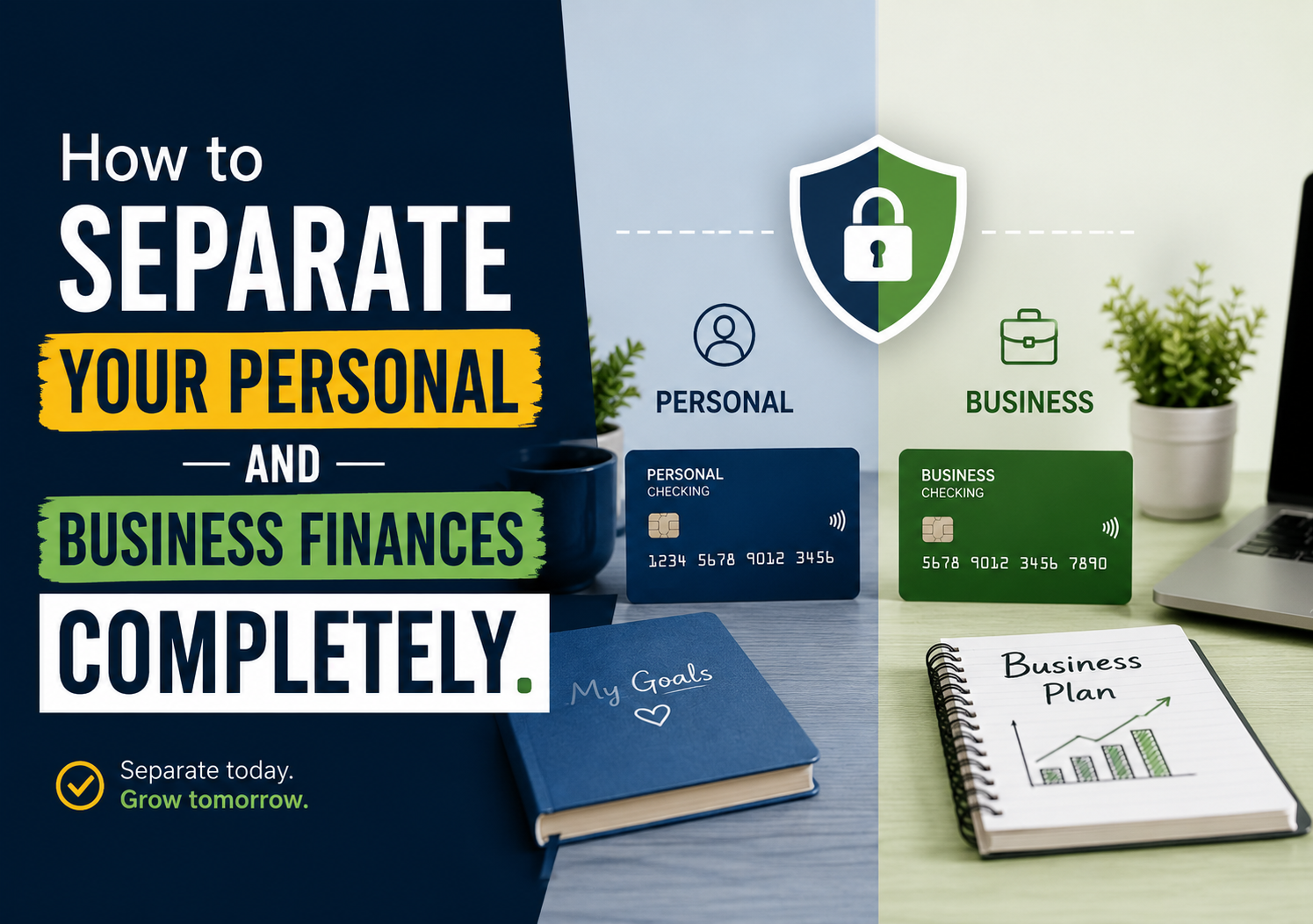
If you’re an entrepreneur, freelancer, or small business owner, you’ve probably heard countless times how important it is to keep your personal and business finances separate. But why is this so crucial, and how can you do it effectively?
At JDP Credit Solutions, we work daily with people who are at all stages of their business journey from setting up their very first side hustle, to securing major funding for expansion. Too often, the lines between personal and business banking are blurry, causing confusion, tax headaches, and even lost financial opportunities. The good news is, with a few simple steps, you can set up healthy boundaries that protect both your wealth and your business future.
Why Separating Finances Matters
Before diving into the how, let’s clarify the why:
- Legal Protection: If your business is an LLC or corporation, combining funds can put your personal assets at risk in the event of a lawsuit (also called “piercing the corporate veil”).
- Easier Taxes: Keeping income and expenses distinct streamlines tax prep and maximizes deductions, while reducing audit risk.
- Clear Financial Picture: You’ll see exactly how your business is performing, making it easier to access loans or attract investors.
- Build Strong Credit: Establishing business credit requires clear proof of business operations, separate from your personal activity.
Step-by-Step Guide to Separating Your Finances
1. Choose the Right Business Structure
Start by registering your business as a separate legal entity, such as an LLC, S-Corp, or Corporation. This not only lends credibility, but also legally distinguishes your business finances from personal ones. Visit the Florida Division of Corporations to get started.
2. Obtain an EIN (Employer Identification Number)
You’ll need an Employer Identification Number from the IRS, even if you don’t have employees. An EIN is required to open a business bank account and apply for business credit. The process is free and quick apply here.
3. Open a Dedicated Business Bank Account
With your new EIN and business formation documents, head to your preferred bank (local Miami banks or national institutions) and open a business checking account. Use only this account for business revenue, expenses, and payroll.
Tips:
- Set up business savings to earmark funds for taxes, emergency needs, or future investment.
- Consider credit unions or banks that understand the needs of small business owners.
4. Get a Business Credit Card (and Use It Responsibly)
A business credit card helps in two ways—it keeps purchases separate, and it helps you build business credit. Use your card for all business expenses, and ensure you pay it off in full each month to maintain a strong credit score. Over time, healthy business credit opens doors to better loan terms and financial products.
5. Track Your Expenses Diligently
Adopt simple accounting software (like QuickBooks, Wave, or Xero) to log all expenses and income. Connect your business bank account and credit card for seamless monitoring. Remember, accurate records are key come tax time—and they’ll help you spot opportunities for growth.
6. Pay Yourself a Salary
Don’t dip into your business account whenever you need funds. Instead, decide on a set salary or scheduled owner’s draw based on your business structure. Transfer this amount into your personal account on a regular basis—just like a paycheck!
7. Avoid Mixing Payments
Refrain from paying personal bills from your business account, and vice versa. If you accidentally use the wrong account for a purchase, record it as an owner’s draw or reimbursement in your books. Consistency is key for legal and tax clarity.
8. Keep Receipts and Detailed Records
Save receipts for all business purchases. Many apps now let you scan and store these receipts digitally. The IRS requires supporting documentation for all deductions.
9. Separate Devices & Subscriptions (When Possible)
If possible, use different computers, phones, or software subscriptions for business and personal use. This further clarifies expenses and can help with deductions.
Common Mistakes to Avoid
- Using personal credit cards or bank accounts for business purchases
- Combining funds (“co-mingling”) even occasionally
- Failing to document loans or capital contributions between yourself and the business
- Ignoring formal payroll or salary for yourself
- Forgetting to maintain a clear digital (or paper) paper trail
How JDP Credit Solutions Can Help
At JDP Credit Solutions, we help entrepreneurs and small business owners with personalized financial education, business credit guidance, and access to funding. Our team can walk you through entity selection, setting up accounts, and establishing strong credit so your business and personal life remain financially healthy.
If you’ve struggled with mixing business and personal money, it’s not too late to reset. Our experts have helped countless clients regain control, repair credit, and position themselves for real growth. Reach out to us for a consultation and let’s build a strong financial future starting with a clean separation.
Conclusion
Taking the time to establish boundaries between your personal and business finances is one of the smartest moves you can make as a small business owner. Not only do you gain protection and clarity now, but you set your business up for sustainable success.
Ready to get started? Visit JDP Credit Solutions or contact our team today. Your future self will thank you!
JDP Credit Solutions helps individuals and small business owners improve their credit and access the funding they need to reach their financial goals. Located in Miami, FL, we offer credit repair, funding assistance, and educational tools to empower you to build a strong financial future.