

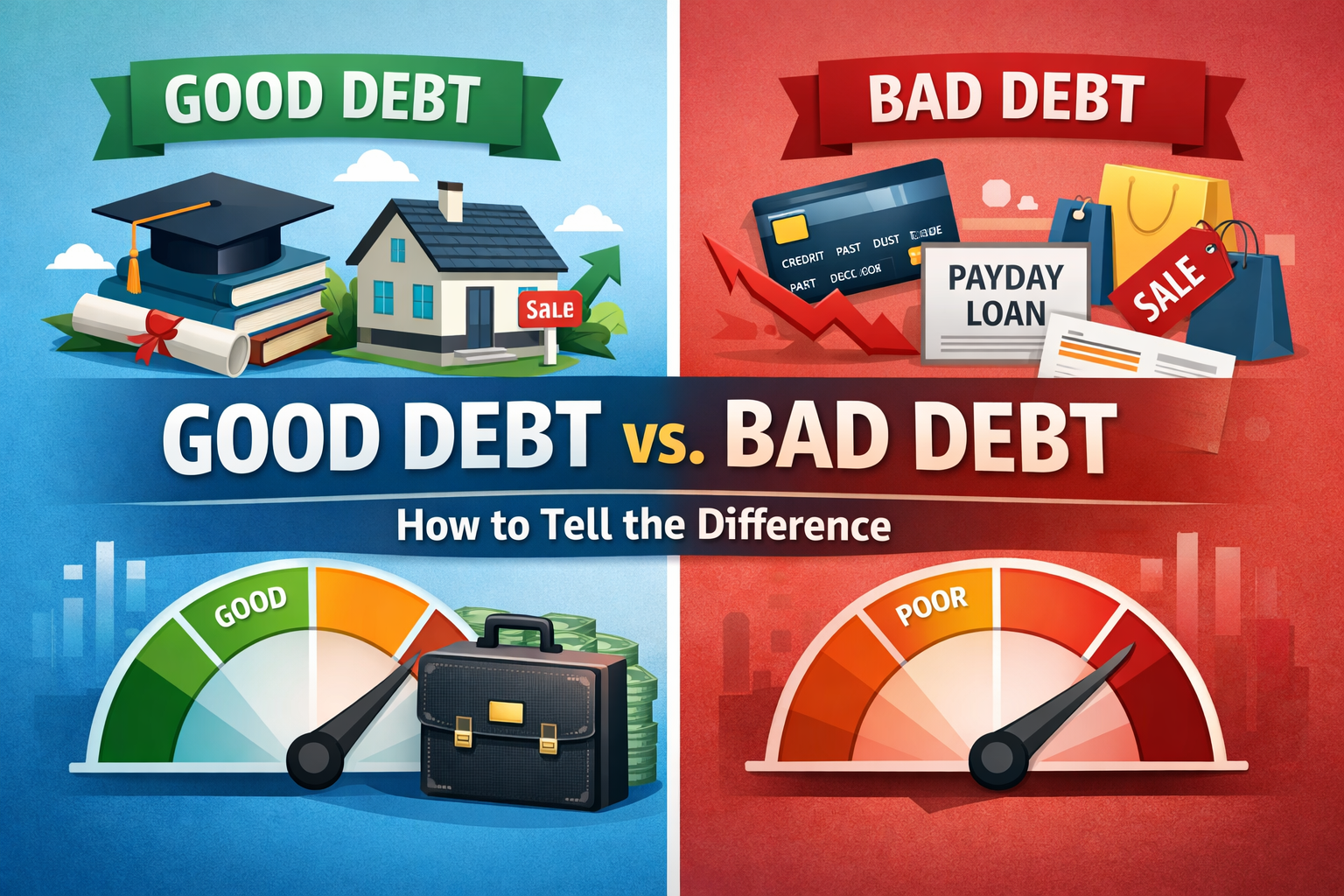
Debt often gets a bad reputation—but not all debt is created equal. When used strategically, good debt can help you build wealth and improve your financial future. On the other hand, bad debt can trap you in high-interest payments and damage your credit score.
Understanding the difference between good debt vs. bad debt is essential if you want to make smarter financial decisions, reduce stress, and improve your credit profile.
In this guide, we’ll break down:
- What good debt is
- What bad debt is
- Key differences between the two
- How debt impacts your credit score
- Tips to turn bad debt into good financial habits
What Is Good Debt?
Good debt is typically debt that helps you build long-term value or increase your income potential. It usually comes with lower interest rates and can positively impact your financial future when managed responsibly.
Common Examples of Good Debt
- Student loans (especially for in-demand careers)
- Mortgages or home loans
- Business loans
- Auto loans (when necessary and affordable)
Why Good Debt Can Be Beneficial
- Helps build credit history
- Often has tax advantages (e.g., mortgage interest)
- Can increase net worth
- Usually offers lower interest rates
- Supports long-term goals like education or homeownership
💡 Good debt works for you—it’s an investment in your future.
What Is Bad Debt?
Bad debt is debt that typically finances depreciating assets or unnecessary purchases, often at high interest rates. This type of debt can quickly spiral out of control and negatively impact your credit score.
Common Examples of Bad Debt
- Credit card balances
- Payday loans
- High-interest personal loans
- Buy Now, Pay Later (BNPL) misuse
- Store financing with deferred interest
Why Bad Debt Is Risky
- High interest rates
- No long-term financial return
- Can lower your credit score
- Increases debt-to-income ratio
- Often tied to impulse spending
🚫 Bad debt works against you and delays financial freedom.
Good Debt vs. Bad Debt: Key Differences
| Feature | Good Debt | Bad Debt |
|---|---|---|
| Interest Rates | Low to moderate | High |
| Financial Return | Yes | No |
| Credit Impact | Can be positive | Often negative |
| Purpose | Investment | Consumption |
| Long-Term Value | Appreciates or grows | Depreciates |
How Debt Affects Your Credit Score
Both good and bad debt impact your credit score, but how you manage it matters more than the type of debt.
Key Credit Factors Influenced by Debt:
- Payment history (35%) – On-time payments help; late payments hurt
- Credit utilization (30%) – High balances on credit cards lower scores
- Credit mix (10%) – A healthy mix of installment and revolving accounts helps
Even good debt can hurt your score if payments are missed.
How to Manage Debt the Smart Way
1. Prioritize High-Interest Debt First
Use the debt avalanche method to pay off the highest interest balances first.
2. Keep Credit Utilization Low
Aim to keep credit card balances under 30% of your limit—ideally under 10%.
3. Use Debt With a Purpose
Before taking on debt, ask:
“Will this help me earn more or build value?”
4. Monitor Your Credit Regularly
Review your credit reports for errors, late payments, or high balances that can be corrected.
Can Bad Debt Become Good Debt?
Yes—with the right strategy.
Ways to improve bad debt:
- Refinance high-interest loans
- Consolidate credit card balances
- Create a structured payoff plan
- Negotiate lower interest rates
- Seek professional credit guidance
Final Thoughts: Debt Isn’t the Enemy—Poor Strategy Is
Debt itself isn’t good or bad—it’s how you use it. Learning the difference between good debt vs. bad debt empowers you to make smarter choices, protect your credit score, and move closer to financial freedom.
If you’re struggling with bad debt or unsure how it’s impacting your credit, getting expert guidance can make all the difference.