

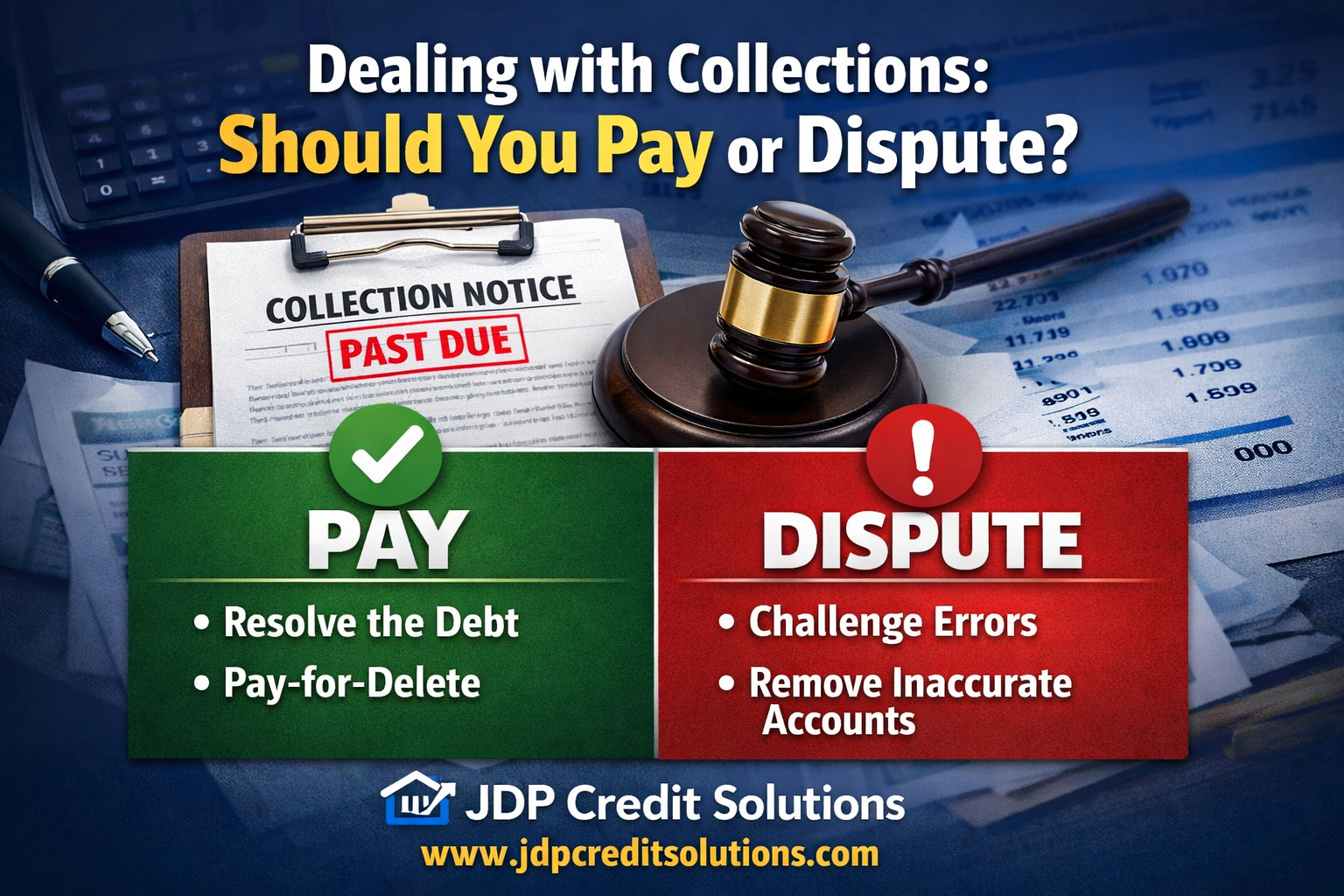
When a collection account shows up on your credit report, it can feel overwhelming—and confusing. One of the most common questions consumers ask is: Should I pay the collection or dispute it? The answer depends on several factors, including the accuracy of the account, its age, and your overall credit goals.
In this guide, we’ll break down when to pay, when to dispute, and how each option affects your credit score, so you can make the smartest decision for your financial future.
What Is a Collection Account?
A collection account appears when a creditor transfers or sells a past-due debt to a third-party collection agency after several months of nonpayment. These accounts are considered major derogatory marks and can significantly lower your credit score.
Collection accounts typically remain on your credit report for seven years from the date of first delinquency, even if you pay them—unless they are removed.
Should You Pay a Collection Account?
Paying a collection can be the right move in certain situations—but not always.
✅ When Paying a Collection Makes Sense
You may want to pay a collection if:
- You’re applying for a mortgage, auto loan, or rental
- The lender requires collections to be resolved
- The debt is valid and recent
- You can negotiate a Pay-For-Delete agreement
- The collection is actively being pursued or sued
⚠️ The Credit Score Myth: Paying Doesn’t Always Help
Contrary to popular belief, paying a collection does not automatically improve your credit score under most scoring models. A “paid collection” is still considered negative unless it’s completely removed from your credit report.
Should You Dispute a Collection Account?
Disputing a collection can be a powerful strategy—especially if the account is inaccurate or unverified.
✅ When You Should Dispute a Collection
You should dispute a collection if:
- The account is not yours
- The balance is incorrect
- Dates are inaccurate
- The collector can’t verify the debt
- The account is older and nearing the 7-year mark
- The collection agency violated the Fair Credit Reporting Act (FCRA)
Credit bureaus are legally required to investigate disputes within 30 days. If the collector can’t verify the debt, it must be removed.
Pay vs. Dispute: Side-by-Side Comparison
| Factor | Paying a Collection | Disputing a Collection |
|---|---|---|
| Improves credit score? | Not always | Yes, if removed |
| Removes account? | Only with Pay-For-Delete | Yes, if unverified |
| Risk of re-aging? | Possible | No |
| Best for inaccurate debts? | ❌ | ✅ |
| Best for urgent loan approval? | ✅ | ⚠️ |
What Is a Pay-For-Delete Agreement?
A Pay-For-Delete is when you negotiate with the collection agency to remove the account entirely in exchange for payment. This is one of the best outcomes when dealing with collections.
Tips for Negotiating Pay-For-Delete:
- Get the agreement in writing
- Offer a lump-sum settlement
- Never admit liability verbally
- Avoid paying until terms are confirmed
Not all agencies agree, but many will—especially for older debts.
What Happens If You Do Nothing?
Ignoring collections can lead to:
- Lawsuits or wage garnishment
- Continued credit score damage
- Difficulty getting approved for loans
- Higher interest rates
However, in some cases—especially with very old debts—waiting and focusing on building positive credit may be a better strategy.
The Smart Strategy: Dispute First, Pay Second
In most cases, the best approach is:
- Dispute the collection first
- If it’s verified, attempt a Pay-For-Delete
- If needed, settle strategically
- Continue building positive credit
This method minimizes risk while maximizing your chances of removing the collection entirely.
Final Thoughts: Should You Pay or Dispute Collections?
There is no one-size-fits-all answer. The key is understanding your rights, reviewing your credit report carefully, and choosing the strategy that aligns with your financial goals.
If you’re unsure what to do, working with a professional credit repair specialist can help you avoid costly mistakes and accelerate your credit recovery.
Need Help Removing Collections?
At JDP Credit Solutions, we help clients legally dispute inaccurate collections, negotiate removals, and rebuild strong credit profiles.
👉 Visit: www.jdpcreditsolutions.com
📩 Get a free credit evaluation today