

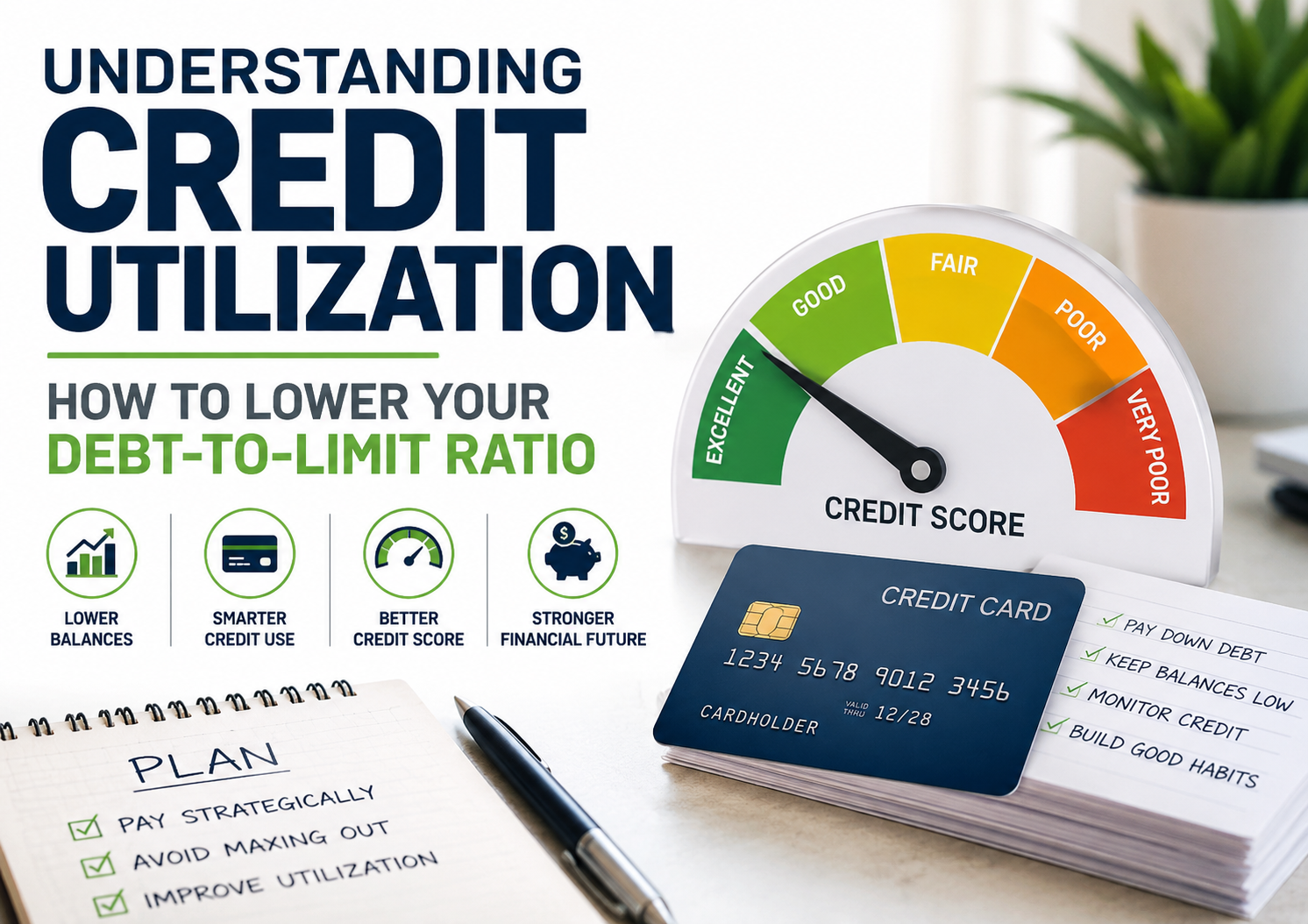
Credit scores play a pivotal role in your financial journey affecting your ability to buy a home, start a business, or secure favorable interest rates. One of the most influential yet often misunderstood aspects of your credit score is credit utilization. At JDP Credit Solutions, we believe financial education is the foundation of lasting financial health. In this comprehensive guide, we’ll explore credit utilization, its impact on your credit score, and practical strategies to optimize your debt-to-limit ratio.
What Is Credit Utilization?
Credit utilization measures the percentage of your available revolving credit (typically credit cards) that you’re currently using. It’s also known as the debt-to-limit ratio. Here’s the basic formula:
Credit Utilization Ratio = (Total Credit Card Balances) ÷ (Total Credit Limits) × 100%
Example:
- If you have $2,000 in balances on credit cards with a combined credit limit of $10,000, your credit utilization is 20%.
Why Credit Utilization Matters
Credit utilization accounts for approximately 30% of your overall FICO credit score. Lenders view a lower ratio as a sign of responsible credit management. A high utilization rate may signal potential risk, possibly lowering your credit score and making it harder to secure funding.
Key Point: Generally, keeping your credit utilization below 30% is advisable for optimal credit health, and below 10% is considered excellent.
The Impact of High Credit Utilization
When your utilization ratio climbs above recommended thresholds, it can have several negative effects:
- Lower Credit Score: High utilization can quickly lower your score, even if you pay your bills on time.
- Difficulty Obtaining Credit: Lenders may see you as overextended and may decline new applications or offer higher interest rates.
- Reduced Flexibility: High balances can reduce your financial flexibility in emergencies or if unexpected expenses arise.
How to Calculate Your Credit Utilization Ratio
- Add Up Credit Card Balances: Include all revolving credit accounts.
- Add Up Credit Limits: Total the credit limits for all cards.
- Divide and Multiply: Divide the total balances by the total limits, then multiply by 100 to get the percentage.
Example Calculation:
- Credit Card 1: $500/$2,000
- Credit Card 2: $750/$3,000
- Credit Card 3: $250/$1,000
- Total Balance: $1,500
- Total Credit Limit: $6,000
- Credit Utilization: ($1,500 ÷ $6,000) × 100% = 25%
Proven Strategies for Lowering Credit Utilization
At JDP Credit Solutions, helping clients implement practical steps is our specialty. Here’s how you can lower your debt-to-limit ratio:
1. Pay Balances Early and Often
Don’t wait for your statement due date; paying off balances multiple times a month can keep reported balances lower.
2. Increase Your Credit Limits
Request a credit limit increase from your card issuers without increasing your spending. This can immediately lower your utilization ratio.
3. Spread Out Charges Across Cards
If you must carry a balance, consider spreading transactions across multiple cards rather than maxing out one.
4. Keep Old Cards Open
The age of your credit accounts also helps your score. Even if you don’t use older cards often, keeping them open increases your total available credit and lowers your utilization.
5. Avoid Large Purchases on Credit Cards
Plan major purchases carefully. If you must use credit, consider how it’ll affect your ratio and pay it off as quickly as possible.
6. Pay Balances Before Statement Closing Date
Most issuers report your balances at the statement closing date (not payment due date). Pay down your balance before this date to lower what’s reported to the credit bureaus.
7. Monitor Your Credit Regularly
Use free tools or credit monitoring services to track your utilization and catch negative changes early. JDP Credit Solutions provides tools and guidance to empower our clients with knowledge.
Addressing Common Credit Utilization Myths
Myth 1: You must carry a small balance to build credit.
- Truth: Paying in full actually shows responsible use there’s no benefit to carrying a balance if you can pay it off.
Myth 2: Closing unused cards is always good.
- Truth: Closing cards can decrease your total available credit, which may increase your utilization ratio and lower your score.
Myth 3: Utilization doesn’t matter if payments are on time.
- Truth: On-time payments are crucial, but utilization is a distinct factor in your score.
How JDP Credit Solutions Can Help
Located in Miami, JDP Credit Solutions specializes in:
- Credit Repair: Addressing and resolving inaccuracies in your credit report.
- Personal & Business Funding: Helping individuals and business owners access the funding they need to grow.
- Financial Education: Empowering you with knowledge and tools to improve your credit decisions.
After overcoming personal credit struggles, our founder created JDP to help others build strong financial futures. Whether you’re facing high utilization, rebuilding after setbacks, or seeking optimal funding strategies, our team offers tailored solutions.
Ready to take control of your credit? Learn more and schedule a free consultation at JDP Credit Solutions.
Final Thoughts
Understanding and managing your credit utilization is one of the most impactful ways to improve your financial standing. With the right strategies, support, and commitment, you can lower your debt-to-limit ratio, boost your credit score, and unlock opportunities for the future.
For personalized help, expert guidance, and actionable tools, reach out to JDP Credit Solutions. Your path to a stronger financial future starts today!