

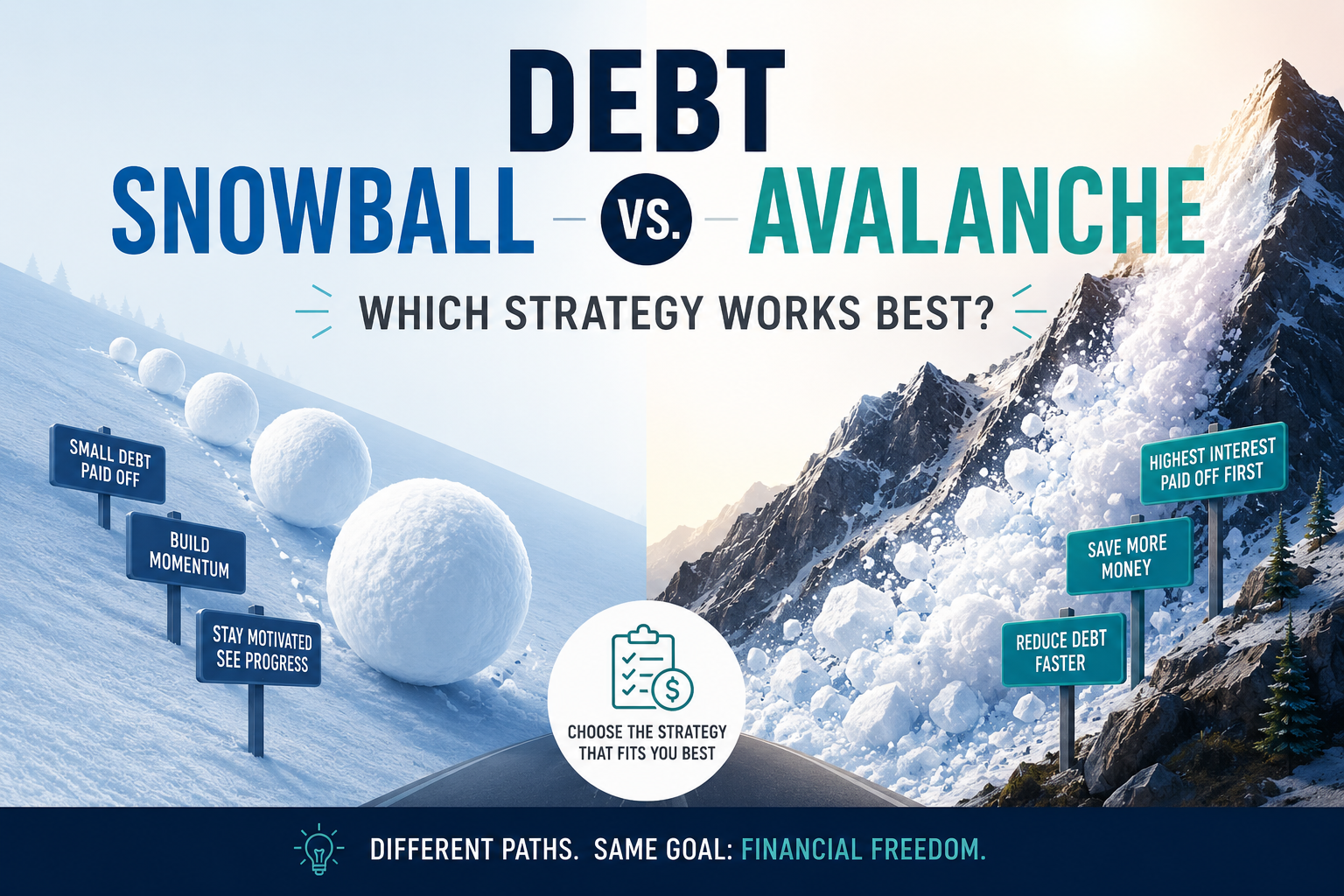
Managing debt can feel overwhelming, but with the right strategy, you can regain control and pave your way to financial freedom. At JDP Credit Solutions, our mission is to empower our clients both individuals and business owners with effective tools and knowledge for a brighter financial future. Two of the most popular debt repayment methods are the debt snowball and debt avalanche. But which one is right for you? In this article, we’ll break down both methods, their pros and cons, and help you decide which fits your goals best.
Understanding Your Options: Snowball vs. Avalanche
Before exploring the differences, let’s briefly define each method:
What is the Debt Snowball Method?
The debt snowball strategy involves:
- Listing all your debts from the smallest balance to the largest.
- Making minimum payments on all debts except the smallest.
- Directing any extra money toward paying off the smallest debt first.
- Once the smallest debt is gone, rolling its payment into the next smallest, creating a “snowball” effect.
What is the Debt Avalanche Method?
The debt avalanche method works a bit differently:
- Listing all your debts from the highest interest rate to the lowest.
- Making minimum payments on all debts except the one with the highest interest rate.
- Applying any extra payments to the debt with the highest interest.
- Once it’s paid off, moving to the next highest, leading to a cascading “avalanche” effect.
How Each Approach Works in Practice
Let’s look at an example. Suppose you have the following debts:
- Credit card A: $2,000 at 19% interest
- Credit card B: $1,000 at 15% interest
- Personal loan: $5,000 at 9% interest
- Store card: $600 at 25% interest
Debt Snowball Sequence:
- Pay off: Store card ($600) → Credit card B ($1,000) → Credit card A ($2,000) → Personal loan ($5,000)
Debt Avalanche Sequence:
- Pay off: Store card ($600, 25%) → Credit card A ($2,000, 19%) → Credit card B ($1,000, 15%) → Personal loan ($5,000, 9%)
Notice that for both methods, the store card (with the smallest balance and highest interest) is paid off first, but for larger portfolios, your payoff order may differ.
Debt Snowball: Pros and Cons
Pros
- Quick Wins: Early successes build motivation and momentum, which can be crucial for staying committed.
- Simplicity: Focusing on one debt at a time makes the process feel manageable and less overwhelming.
- Psychological Benefit: Paying off small debts quickly can boost your confidence and reinforce positive financial habits.
Cons
- Potentially Higher Interest Costs: Because you’re not targeting high-interest debts first, you may pay more in interest over time.
- Less Efficient: Mathematically, it may take longer and cost more overall compared to the avalanche method.
Debt Avalanche: Pros and Cons
Pros
- Interest Savings: Eliminates debts with the highest interest first, which saves you money over time.
- Faster Payoff (Mathematically): More of your payments go toward principal rather than interest as you progress.
Cons
- Slower Initial Progress: If your highest interest debts also have large balances, it can take longer to experience the satisfaction of your first paid-off debt.
- Requires Discipline: Without small, quick wins, some people may lose motivation before seeing results.
Which Strategy Is Best for You?
Choosing a debt repayment strategy isn’t just about numbers it’s about what will keep you motivated to follow through. Here’s how to decide:
- Consider Your Personality:
- If motivation and psychological momentum are important, the debt snowball may be best.
- If you’re detail-oriented and disciplined, the debt avalanche can save you money in the long run.
- Assess Your Debts:
- If your smallest balances also carry the highest interest rates, both methods may lead you to the same starting point.
- Significant differences in interest rates make the avalanche method more appealing mathematically.
- Think About Your Goals:
- Quick wins can be crucial if you’re feeling overwhelmed.
- If reducing total interest paid is your top priority, avalanche is often better.
Combining Approaches for Maximum Impact
Did you know you aren’t limited to just one method? Some people start with the snowball to build motivation, then switch to the avalanche as they gain confidence. You can also set mini-milestones for yourself and celebrate each debt you eliminate, no matter which method you choose.
How JDP Credit Solutions Can Help
At JDP Credit Solutions, we’ve helped countless individuals and small businesses in Miami and beyond regain control of their finances. Our customized approach to credit repair, personal funding, business funding, and financial education means you receive guidance tailored to your unique needs.
We can help you:
- Analyze your full debt picture
- Create a personalized payment plan
- Provide ongoing support and education
- Review your credit reports and identify opportunities for improvement
Take the Next Step Toward Financial Freedom
Whether you choose the debt snowball, the avalanche, or a blend of both, the best strategy is the one you stick with. The journey may not be easy, but with the right plan and a supportive partner like JDP Credit Solutions, lasting financial freedom is possible.
Ready to take control of your finances? Contact us today to learn more about our services and schedule your free consultation.
JDP Credit Solutions, based in Miami, FL, empowers clients with the knowledge and resources needed to build strong financial futures. We understand what it’s like to struggle with debt and are here to help every step of the way.