

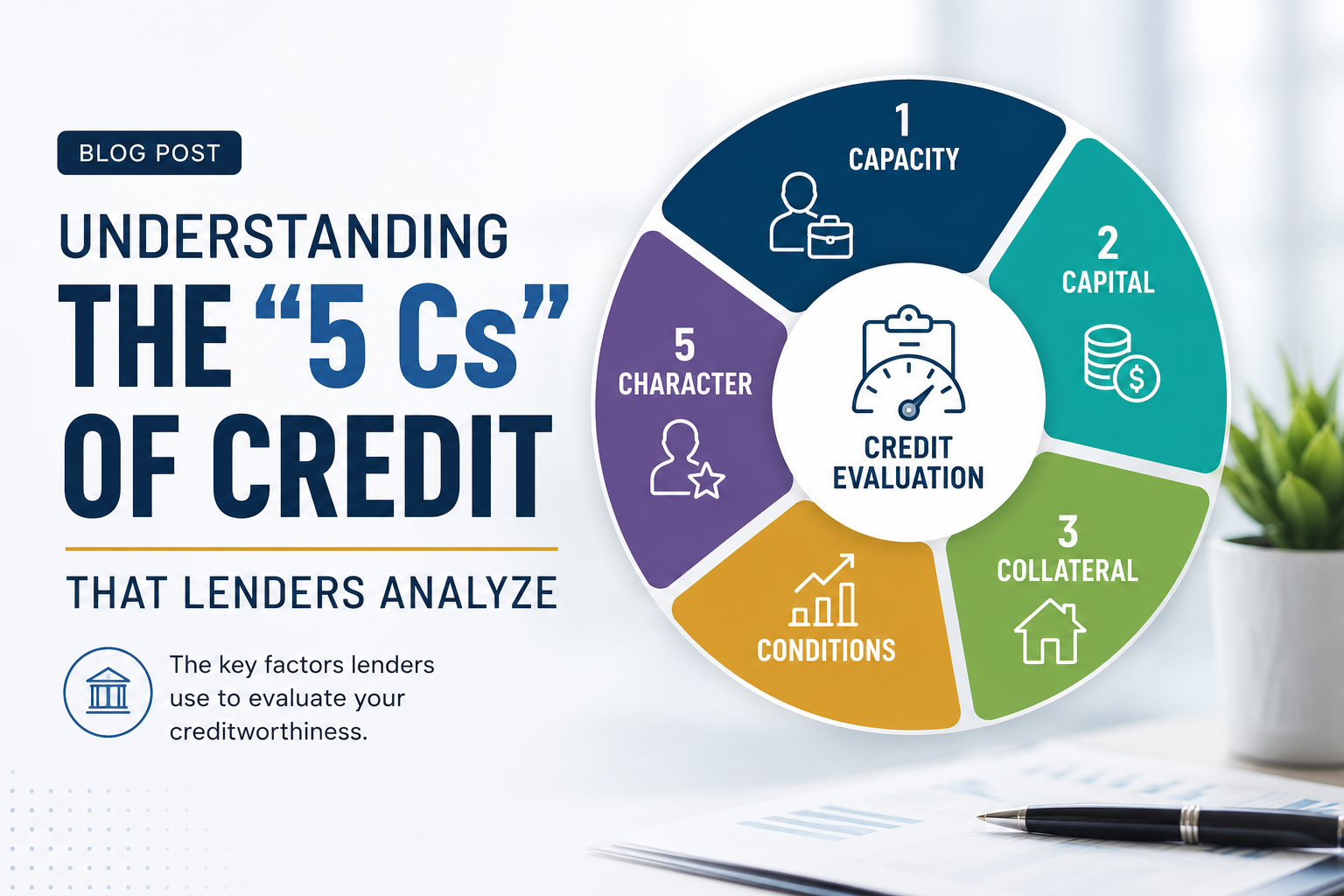
When it comes to borrowing money whether for personal needs or for business ambitions understanding the criteria lenders use is essential. At JDP Credit Solutions we empower clients with financial knowledge which is at the core of our mission. Being familiar with the “5 Cs” of credit enables you to see your application from a lender’s perspective, ultimately improving your chances of approval and setting you on the path to financial success.
What Are the “5 Cs” of Credit?
The “5 Cs” of credit are a classic framework that lenders use to evaluate a borrower’s creditworthiness. Each “C” represents a different aspect of your financial profile. By analyzing these factors, lenders assess the risk of lending to you. They are:
- Character
- Capacity
- Capital
- Collateral
- Conditions
Let’s explore each in detail and see what you can do to give yourself the best chance of being approved for credit or funding.
1. Character: Your Trustworthiness
Definition:
Character represents your reputation as a borrower your history of repaying debts and honoring financial obligations.
How Lenders Assess Character:
- Reviewing your credit report for late payments, defaults, bankruptcies, or collections.
- Evaluating the length of your credit history and types of credit used.
- Sometimes, considering personal references or business experience (for small business loans).
How to Improve Your Character:
- Pay all bills on time, every time.
- Regularly review your credit report for accuracy and dispute any errors.
- Work with a credit repair professional, like JDP Credit Solutions, if you need to remove negative marks or rebuild your score.
2. Capacity: Your Ability to Repay
Definition: Capacity is your ability to handle new debt obligations on top of your existing financial commitments.
How Lenders Assess Capacity:
- Looking at your debt-to-income (DTI) ratio, which compares your monthly debt payments to your gross income.
- Evaluating your employment history and income stability.
- For business borrowers, reviewing the business’s cash flow statements and projections.
How to Strengthen Capacity:
- Reduce existing debts where possible.
- Increase your income through side jobs or business revenue.
- Keep detailed and accurate records of income, especially if you’re self-employed or own a business.
3. Capital: The Money You Have at Stake
Definition: Capital refers to your own funds or assets that you’re putting toward a potential investment or loan. It demonstrates your commitment and reduces a lender’s risk.
How Lenders Assess Capital:
- Measuring your savings, investments, or business equity.
- Looking at your down payment (for mortgage or business real estate loans).
- Considering any assets you can contribute to a business venture.
How to Build Capital:
- Save consistently, even if only a small amount monthly.
- Invest in appreciating assets when possible.
- Reinvest profits into your business or personal savings.
4. Collateral: Assets Securing the Loan
Definition: Collateral is property or assets you pledge as security for a loan. If you default, the lender can seize this asset to recoup their loss.
How Lenders Evaluate Collateral:
- Assessing the value and liquidity of assets like real estate, vehicles, equipment, or inventory.
- Lenders prefer collateral that can be quickly and easily converted into cash.
- For unsecured loans, strong character and capacity become even more important.
Tips for Collateral:
- Understand what assets you have that hold value.
- Make sure titles and ownership documents are clear and updated.
- Consider co-signers or guarantors if you lack direct collateral.
5. Conditions: The Lending Environment
Definition: Conditions refer to the factors outside your personal profile that affect the loan, such as the loan’s purpose and the broader economic environment.
How Lenders Examine Conditions:
- Asking what the purpose of the loan is for a car, a home, inventory, expansion, etc.
- Looking at market trends, economic forecasts, and industry-specific conditions.
- Considering the loan amount, term, and interest rate.
How to Navigate Conditions:
- Be clear and detailed about the intended use of the loan.
- Demonstrate an understanding of your market if applying for a business loan.
- Provide supporting documents or a business plan, if needed.
Putting It All Together
Understanding the “5 Cs” of credit equips you to present yourself as a strong, reliable borrower increasing your likelihood of obtaining favorable funding. Remember, lenders want to minimize risk while helping responsible borrowers achieve their financial goals. Focus on improving each “C” proactively!
At JDP Credit Solutions, we are here to help you:
- Interpret your credit report
- Build or rebuild your credit profile
- Prepare for loan applications
- Learn financial management strategies for long-term success
How JDP Credit Solutions Can Help
Our professional team in Miami specializes in:
- Credit repair for individuals and businesses
- Access to personal and business funding
- Financial education tools and personalized coaching
Whatever your starting point, our mission is to give you the resources, support, and confidence to unlock new financial opportunities.
Ready to take control of your credit? Visit jdpcredit.com to learn more or schedule a free consultation today.
Conclusion
Mastering the “5 Cs” of credit is your roadmap to navigating the funding process with confidence. Start today by reviewing your credit profile, building positive habits, and partnering with trusted professionals like JDP Credit Solutions for guidance every step of the way. Your financial goals are within reach!