

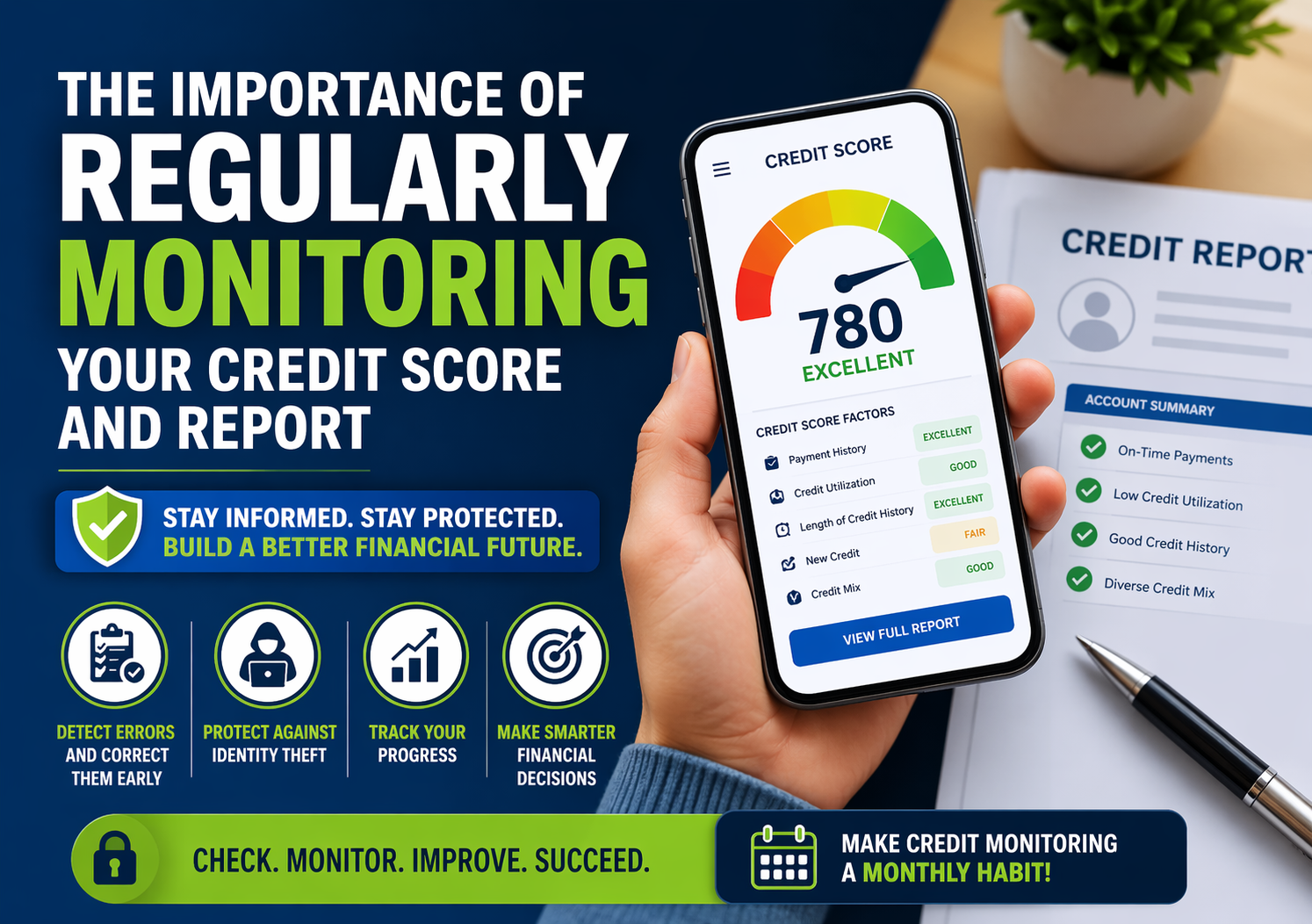
Your credit score isn’t just a number—it’s a financial passport that can open doors or quietly shut them. Yet, many people only check it when they’re applying for a loan or credit card. That’s a mistake.
Regularly monitoring your credit score and report is one of the simplest yet most powerful habits you can build to protect your financial future, catch errors early, and improve your overall credit health.
What Is Credit Monitoring—and Why Should You Care?
Credit monitoring is the practice of regularly checking your credit score and reviewing your credit report for changes.
Why it matters:
- Lenders use your credit score to determine approval and interest rates
- Errors on your report can lower your score unfairly
- Fraud or identity theft can go unnoticed without regular checks
In short: If you’re not monitoring your credit, you’re leaving your financial reputation unprotected.
Top Benefits of Monitoring Your Credit Score
1. Catch Errors Before They Cost You
Mistakes on credit reports are more common than you think. These can include:
- Incorrect account balances
- Accounts that don’t belong to you
- Late payments reported inaccurately
Pro Tip: Even a small error can drop your score by dozens of points.
2. Detect Identity Theft Early
Identity theft often starts quietly. Monitoring your credit helps you spot:
- New accounts you didn’t open
- Hard inquiries you didn’t authorize
- Sudden drops in your score
The earlier you catch it, the easier it is to fix.
3. Track Your Financial Progress
If you’re working to improve your credit score, regular monitoring allows you to:
- See what strategies are working
- Stay motivated with progress updates
- Adjust your plan when needed
4. Prepare for Major Financial Decisions
Planning to:
- Buy a home?
- Finance a car?
- Apply for a credit card?
Knowing your score ahead of time helps you:
- Avoid surprises
- Qualify for better rates
- Strengthen your application
5. Improve Your Credit Score Faster
When you actively monitor your credit, you can:
- Pay down high balances strategically
- Keep utilization low
- Avoid missed payments
Consistency leads to long-term improvement.
How Often Should You Check Your Credit Score?
Recommended Frequency:
- Credit score: At least once a month
- Credit report: At least once a year (or more if rebuilding credit)
You can access a free credit report annually through official sources, and many platforms now offer free monthly score updates.
What to Look for in Your Credit Report
When reviewing your report, pay close attention to:
Key Areas to Check:
- Personal information (name, address, SSN)
- Account history and payment status
- Credit utilization
- Hard inquiries
- Collections or negative marks
Best Practices for Effective Credit Monitoring
Follow These Simple Steps:
- Set a monthly reminder to check your credit score
- Review all three credit bureaus for accuracy
- Dispute errors immediately if you find any
- Use credit monitoring tools or apps for alerts
- Keep your credit utilization below 30%
Tools You Can Use to Monitor Your Credit
There are many tools available, including:
- Credit monitoring services
- Banking apps with built-in score tracking
- Paid services with identity theft protection
Credit monitoring Suggestion:
👉 Best Credit Monitoring Tool in 2026
External Authority Reference:
- Federal Trade Commission (FTC) guidance on credit reports
- Consumer Financial Protection Bureau (CFPB) credit monitoring resources
Common Mistakes to Avoid
- Only checking your credit before applying for loans
- Ignoring small discrepancies
- Relying on just one credit bureau
- Not setting alerts for suspicious activity
Conclusion: Take Control of Your Financial Future
Monitoring your credit score and report isn’t just a good habit—it’s a critical part of financial success. It helps you stay informed, avoid costly mistakes, and build a stronger financial profile over time.
Call to Action (CTA):
Start today.
Set a reminder, check your credit score, and review your report.
👉 Your future self—and your wallet—will thank you.
FAQ Section
1. How often should I monitor my credit score?
You should check your credit score at least once a month to stay updated on any changes or suspicious activity.
2. Is checking my credit score bad for it?
No. Checking your own credit score is considered a soft inquiry and does not affect your score.
3. Where can I get a free credit report?
You can access your free annual credit report through authorized platforms that provide reports from all three major bureaus.
4. What should I do if I find an error on my credit report?
File a dispute with the credit bureau reporting the error as soon as possible and provide supporting documentation.
5. Can monitoring my credit really improve my score?
Yes. While monitoring itself doesn’t increase your score, it helps you take actions that lead to improvement, such as correcting errors and managing debt effectively.