

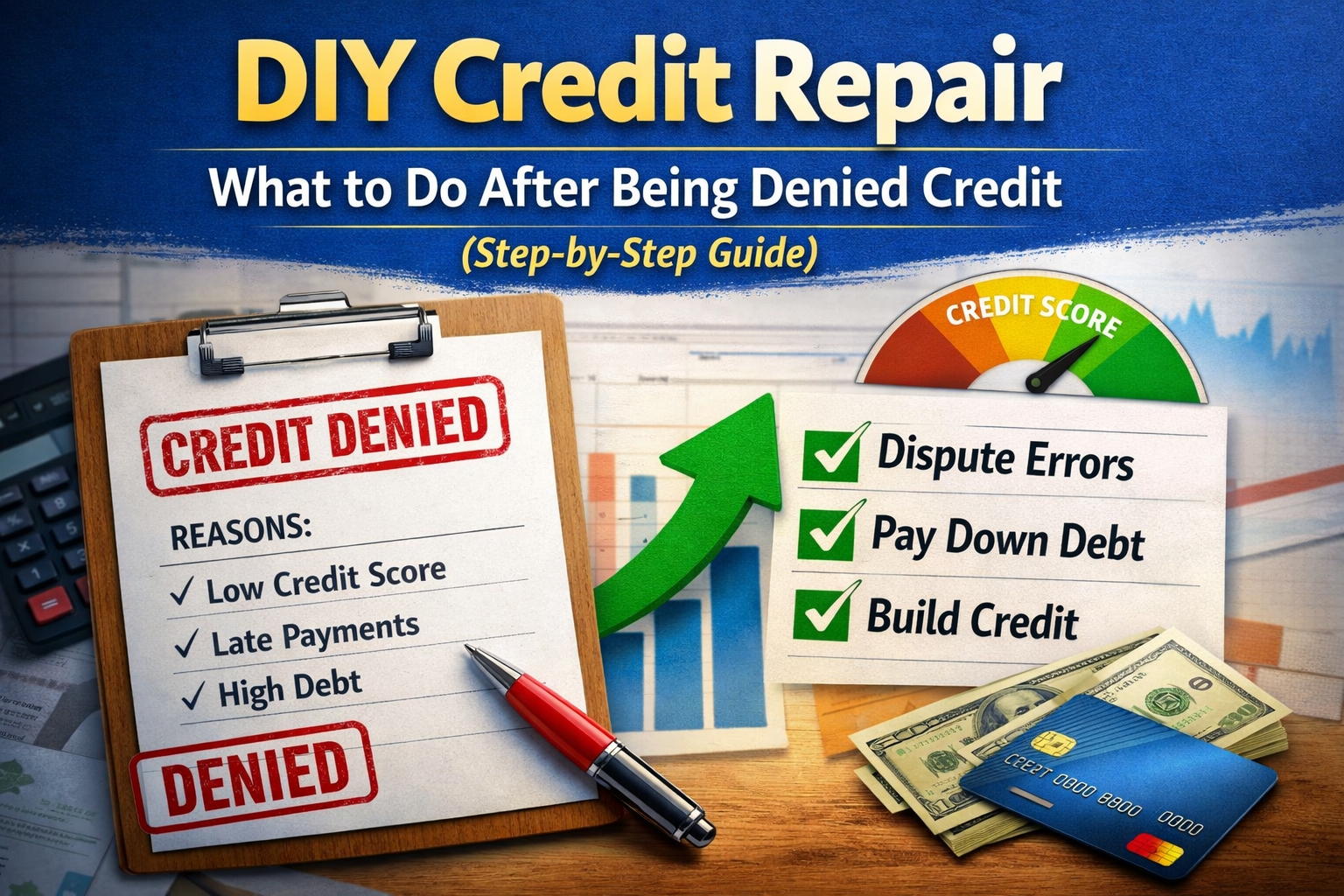
Getting denied for credit can feel like hitting a wall—but it’s actually a roadmap in disguise. Every denial comes with clues about what’s holding you back. If you know how to read them and act strategically, you can turn that rejection into your next approval.
Let’s break down exactly how to repair your credit step-by-step—without paying a credit repair company.
Step 1: Understand Why You Were Denied
When you’re denied credit, lenders are required to send an adverse action notice. This document tells you the exact reasons behind the decision.
Common credit denial reasons:
- Low credit score
- High credit utilization
- Late or missed payments
- Too many recent inquiries
- Limited credit history
👉 Action Tip: Don’t guess—use the notice as your starting point.
Step 2: Pull and Review Your Credit Reports
You’re entitled to free credit reports from all three major bureaus.
What to check for:
- Incorrect personal information
- Accounts you don’t recognize
- Late payments reported incorrectly
- Duplicate accounts
- Outdated negative items
👉 Pro Tip: Even small errors can drop your score significantly.
Check out our Guide: Disputing Errors on Your Credit Report: A Step-by-Step Guide
Step 3: Dispute Errors Immediately
If you find inaccuracies, dispute them with the credit bureaus.
How to dispute effectively:
- Gather supporting documents
- File disputes online or by mail
- Be clear and specific
- Follow up within 30 days
Example:
If a credit card shows a late payment you never made, submit bank statements proving on-time payment.
👉 Impact: Removing just one negative item can boost your score quickly.
Step 4: Lower Your Credit Utilization
Your credit utilization ratio makes up a large portion of your score.
Ideal target:
- Below 30% (good)
- Below 10% (excellent)
Quick ways to reduce utilization:
- Pay down balances aggressively
- Make multiple payments per month
- Request a credit limit increase
👉 Example:
If your limit is $1,000 and your balance is $800 (80%), paying it down to $200 (20%) can significantly improve your score.
Step 5: Build Positive Credit History
If your credit profile is thin or damaged, you need to add positive activity.
Best tools for rebuilding credit:
- Secured credit cards
- Credit builder loans
- Authorized user accounts
👉 Strategy: Use one account, keep utilization low, and pay on time—consistency beats complexity.
Step 6: Pay Every Bill On Time (No Exceptions)
Payment history is the #1 factor in your credit score.
Set yourself up for success:
- Enable autopay
- Use payment reminders
- Align due dates with your paycheck
👉 Missing even one payment can undo months of progress.
Step 7: Limit New Credit Applications
Too many inquiries can signal risk to lenders.
Best practice:
- Wait at least 3–6 months between applications
- Only apply when your profile has improved
👉 Focus on building, not chasing approvals.
Step 8: Track Your Progress Monthly
Credit repair isn’t instant—but it is predictable if you stay consistent.
What to monitor:
- Score changes
- Removed negative items
- Improved utilization
👉 Use credit monitoring tools to stay accountable.
Our recommended Credit Monitoring: Credit Monitoring Service
Real-World Example
Scenario:
Someone with a 580 credit score gets denied for a credit card.
Actions Taken:
- Disputed 2 inaccurate late payments
- Paid down utilization from 75% to 25%
- Opened a secured credit card
Result (90 days):
- Score increased to ~650
- Approved for a starter unsecured card
External Authority References
- Consumer Financial Protection Bureau (CFPB) – Credit denial rights
- Federal Trade Commission (FTC) – Disputing credit report errors
- Experian, Equifax, TransUnion – Credit scoring models
Pro Tips Most People Miss
- Credit scores update faster when balances are paid before the statement date
- Old negative items lose impact over time—don’t panic
- Consistency matters more than quick hacks
Final Thoughts
Being denied credit isn’t the end—it’s the beginning of a smarter strategy. With the right steps, you can rebuild your credit profile, increase your score, and get approved with better terms.
Call to Action (CTA)
Ready to take control of your credit?
Start today by reviewing your credit report and disputing any errors you find. If you stay consistent with these steps, you could see noticeable improvements in as little as 30–90 days.
👉 Want a faster roadmap? Check out our step-by-step credit repair checklist
FAQ Section
1. How long does it take to repair credit after being denied?
It depends on your situation, but most people see improvement within 30–90 days if they take consistent action.
2. Can I fix my credit myself without a credit repair company?
Yes. DIY credit repair is completely possible and often more effective since you control the process.
3. Does disputing items hurt my credit score?
No. Disputing inaccurate information does not hurt your score—it can actually improve it if items are removed.
4. What is the fastest way to increase my credit score?
Lowering your credit utilization and correcting errors are the quickest ways to see a boost.
5. Why was I denied credit with a decent score?
Lenders also consider factors like income, debt-to-income ratio, and recent inquiries—not just your score.