

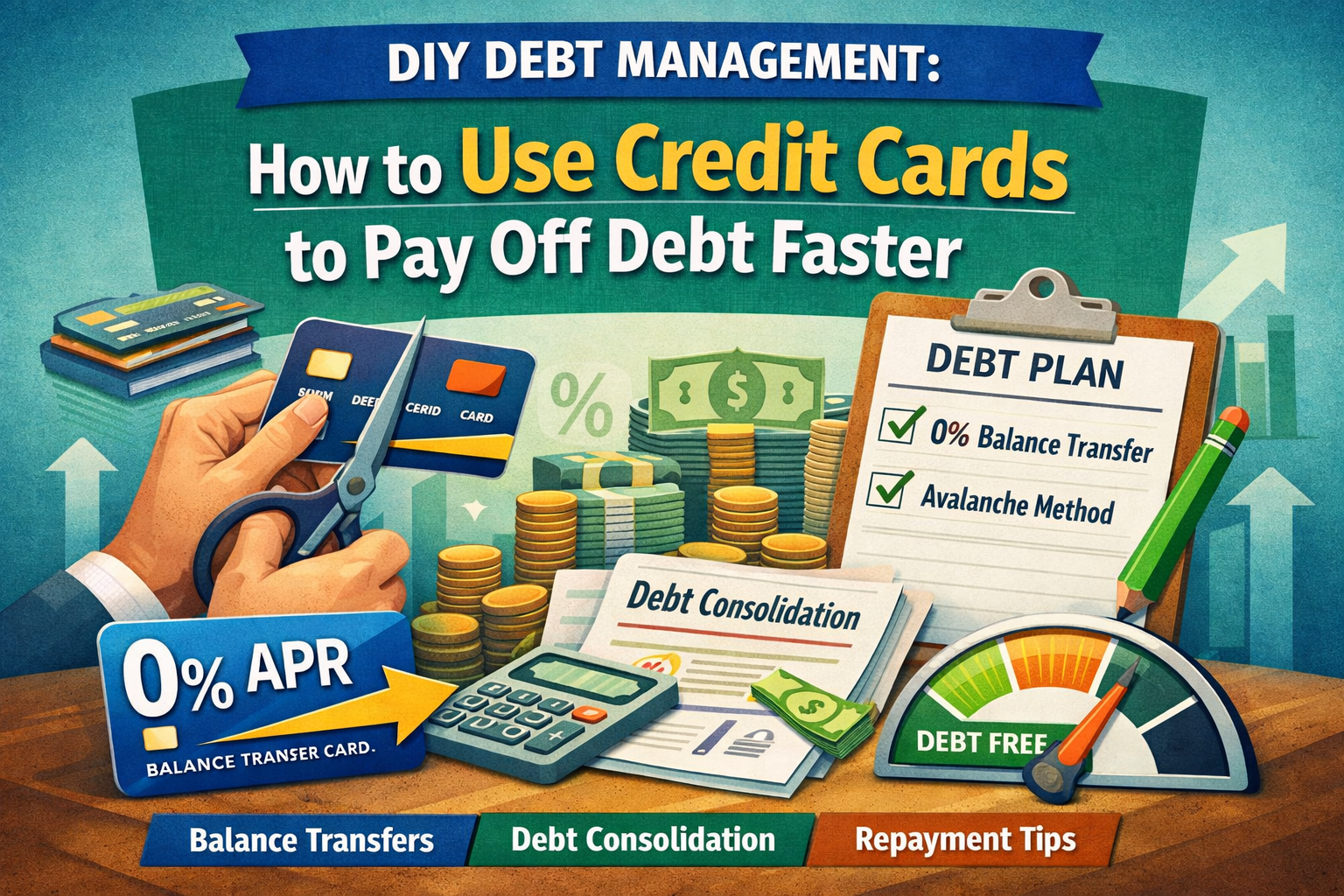
Drowning in debt doesn’t always require drastic measures—sometimes, the tools you already have can work in your favor. Credit cards, when used strategically, can become powerful allies in your DIY debt management plan. The key is knowing how to leverage them wisely—not recklessly.
In this guide, you’ll learn practical, actionable strategies to use credit cards to reduce interest, consolidate balances, and accelerate your path to financial freedom.
Understanding the Strategy: When Credit Cards Help (and Hurt)
Before diving in, it’s important to understand this:
Credit cards can either solve your debt problem—or make it worse.
When They Help:
- Lowering high-interest debt through balance transfers
- Simplifying payments via consolidation
- Improving cash flow with temporary 0% APR offers
When They Hurt:
- Adding new debt without a repayment plan
- Missing payments and incurring fees
- Increasing credit utilization too much
Top DIY Debt Management Strategies Using Credit Cards
1. Use Balance Transfer Credit Cards (0% APR Offers)
One of the most effective DIY debt management techniques is transferring high-interest balances to a 0% APR balance transfer card.
How it Works:
- Move your existing debt to a new card
- Pay 0% interest for 12–21 months (intro period)
- Focus on paying down the principal
Example:
If you have $5,000 at 22% interest:
- You could save hundreds (or thousands) in interest by transferring it to a 0% APR card
Pro Tips:
- Pay more than the minimum
- Aim to clear the balance before the promo period ends
- Watch for balance transfer fees (typically 3–5%)
2. Consolidate Multiple Debts Into One Card
Managing multiple payments can be overwhelming. Credit card consolidation simplifies your finances.
Benefits:
- One monthly payment
- Easier tracking
- Potentially lower interest rate
Best Practice:
Only consolidate if the new card offers a lower APR than your current debts.
3. Leverage Lower Interest Credit Cards
If you don’t qualify for 0% APR offers, look for cards with lower ongoing interest rates.
Why This Matters:
Lower APR = more of your payment goes toward the principal instead of interest.
4. Apply the Avalanche or Snowball Method
Pair your credit card strategy with proven debt repayment methods:
Debt Avalanche (Best for Saving Money):
- Pay off highest interest rate first
- Minimizes total interest paid
Debt Snowball (Best for Motivation):
- Pay off smallest balance first
- Builds momentum quickly
5. Keep Credit Utilization Low
Your credit utilization ratio (how much credit you’re using) impacts both your credit score and financial flexibility.
Ideal Rule:
- Keep utilization under 30%
- Under 10% is even better
6. Avoid New Purchases While Paying Down Debt
This is where many DIY debt management plans fail.
Golden Rule:
👉 Stop adding new debt while trying to eliminate existing balances.
Common Mistakes to Avoid
- ❌ Opening multiple cards without a plan
- ❌ Ignoring transfer fees
- ❌ Missing payments (kills your credit score)
- ❌ Relying only on minimum payments
- ❌ Closing old accounts too quickly
Real-World Application: Simple Plan
Here’s a quick step-by-step plan you can follow:
- List all your debts (balances, APRs, minimums)
- Apply for a 0% APR balance transfer card
- Transfer highest-interest balances first
- Choose Avalanche or Snowball method
- Set automatic payments
- Track progress monthly
Check out our other guides Below
- “How to Improve Your Credit Score Fast”
- “Best Budgeting Strategies for Beginners”
- “Credit Utilization Explained”
- “How to Use a Balance Transfer Credit Card to pay off debt”
External Authority References
- Federal Reserve (interest rate data)
- Consumer Financial Protection Bureau (CFPB)
- Experian / Equifax (credit score guidelines)
Conclusion: Take Control of Your Debt Today
DIY debt management isn’t about shortcuts—it’s about strategy and discipline. When used correctly, credit cards can reduce interest, simplify payments, and accelerate your journey to becoming debt-free.
But remember: the strategy only works if you stay consistent and avoid falling back into old habits.
Call to Action (CTA)
Ready to take control of your debt and boost your credit score?
Start your DIY plan today—or get expert guidance to accelerate your results.
👉 Explore smarter credit strategies and tools on your journey to financial freedom.
FAQ Section
1. Can using credit cards really help pay off debt?
Yes—if used strategically. Tools like balance transfers and low APR cards can reduce interest and speed up repayment.
2. What is the best credit card strategy for debt payoff?
A combination of balance transfers + debt avalanche method is often the most cost-effective approach.
3. Does transferring balances hurt your credit score?
It may cause a small temporary dip due to a hard inquiry, but responsible use can improve your score over time.
4. How many balance transfers should I do?
As few as possible. Focus on one well-planned transfer rather than multiple accounts.
5. What happens after the 0% APR period ends?
Any remaining balance will be charged at the regular APR, so aim to pay it off before the promotional period expires.