

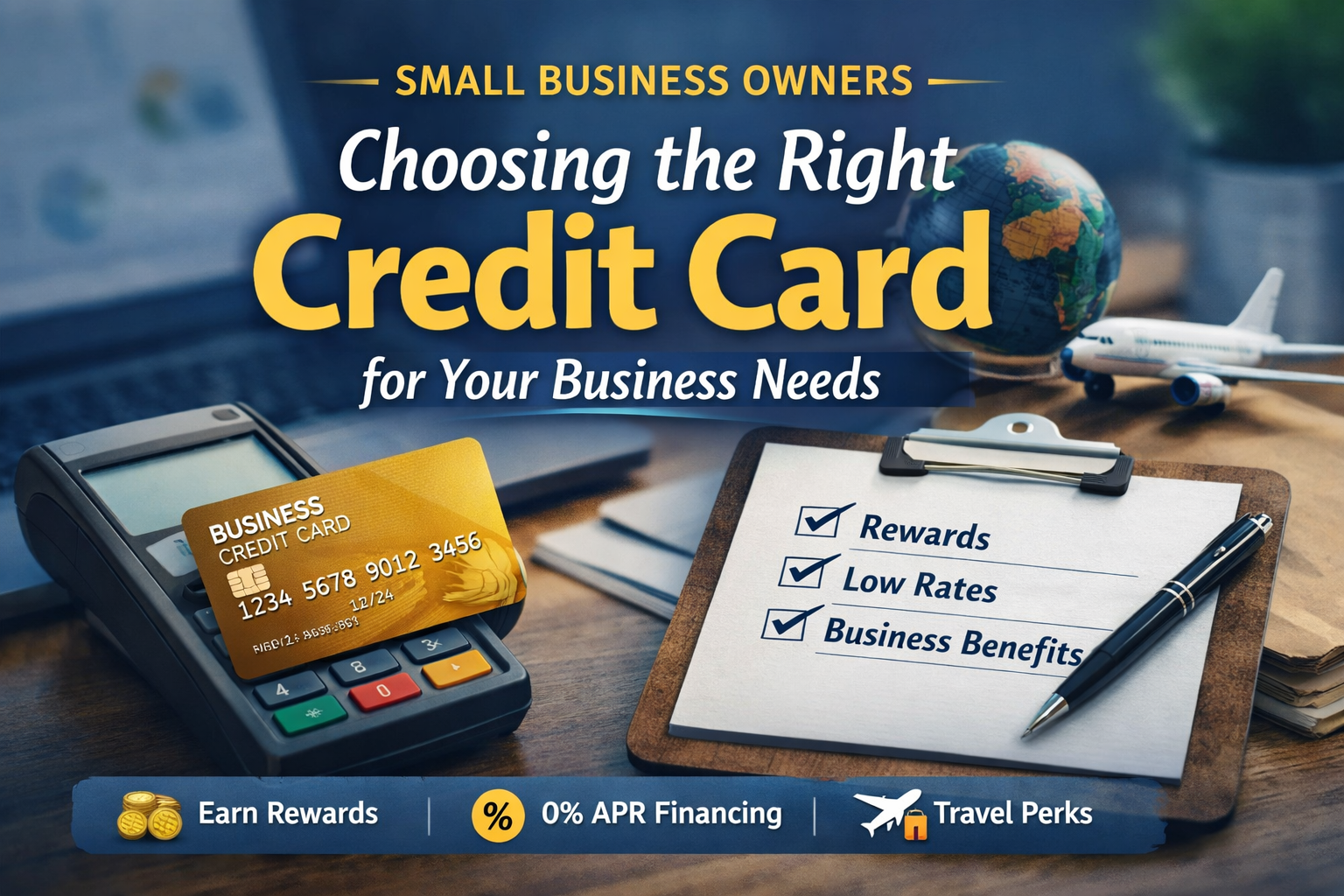
Best Credit Cards for Small Business Owners | How to Choose
Running a small business means every dollar—and every decision—counts. One tool that can significantly streamline expenses, build credit, and earn valuable rewards is the right small business credit card. But with hundreds of options available, how do you choose the best one?
This guide breaks down exactly how to evaluate, compare, and pick the ideal business credit card based on your financial needs, growth goals, and spending habits.
Why Business Credit Cards Matter for Small Business Owners
A business credit card isn’t just a payment tool—it’s a financial asset. The right card can:
- Separate business and personal finances
- Improve cash flow
- Build business credit
- Earn rewards on everyday expenses
- Provide purchase protections
- Offer travel or cash-back benefits
- Help prepare for tax time with categorized spending
For entrepreneurs and small business owners, the benefits can translate directly into reduced costs and increased operational efficiency.
How to Choose the Right Credit Card for Your Small Business
1. Identify Your Business Spending Habits
Before comparing cards, review where your business spends the most money.
Common business spending categories include:
- Office supplies
- Advertising and marketing
- Digital software subscriptions
- Gas and transportation
- Travel
- Shipping and logistics
- Inventory
Example:
If your business spends heavily on online marketing, a rewards card offering bonus points for advertising purchases may yield significant value.
2. Determine Your Priority: Rewards, Savings, or Financing
Most small business credit cards fall into three categories:
A. Rewards Credit Cards
Best for businesses that pay monthly balances in full.
Common rewards types:
- Cash-back (1–5% back depending on category)
- Points
- Miles
These rewards can be reinvested into the business, offset expenses, or fund travel.
B. Low-Interest or 0% APR Cards
Ideal for new businesses or those needing short-term financing.
Benefits include:
- Introductory 0% APR for 6–18 months
- Low or no annual fees
- Ability to manage large purchases without immediate interest
C. Travel Credit Cards
Best for businesses with frequent travel or client visits.
Features include:
- Airport lounge access
- Free checked bags
- Airline points or miles
- Travel insurance and protections
3. Evaluate Fees and Costs
Not all credit cards are free—and some fees are worth paying based on the benefits.
Key fees to compare:
- Annual fee
- APR (regular and variable)
- Late payment fees
- Foreign transaction fees
- Balance transfer fees
Tip: Higher annual-fee cards often provide higher rewards, better perks, and stronger protections.
4. Look at Credit Requirements
Some business cards require excellent credit; others accept fair or building credit profiles.
Credit tiers:
- 750+ Excellent
- 700–749 Good
- 640–699 Fair (some business cards available)
- 639 and below (secured business cards recommended)
If your business or personal credit is still improving, consider a secured small business credit card to build credit safely.
5. Review Additional Business Benefits
Beyond rewards and interest rates, look for value-added features:
- Expense tracking dashboards
- Employee cards with spending limits
- Fraud protection
- Integration with QuickBooks, Xero, or accounting tools
- Purchase protection and extended warranties
These features can save time, reduce administrative work, and protect your business.
6. Compare Cards Side-by-Side
Create a simple comparison chart with:
- Rewards structure
- Annual fee
- Intro APR
- Regular APR
- Credit score needed
- Extra perks
This helps visualize which card aligns best with your business model.
Top Credit Card Categories for Small Business Owners (Examples)
- Best Cash-Back Business Card: Ideal for businesses with high operational expenses.
- Best Travel Business Card: Perfect for frequent flyers and client meetings.
- Best 0% APR Business Card: Great for startups or financing large purchases.
- Best No-Annual-Fee Option: For entrepreneurs looking to minimize costs.
Check out these other guides on Business Credit
- “How to Build Business Credit Fast”
- “7 Ways to Lower Your Business Expenses”
- “Beginner’s Guide to Credit Cards”
- “Top Business Finance Tools for Small Businesses”
Other Resources
- SBA official resources on business credit
- Federal Trade Commission guidelines
- Experian business credit insights
FAQs
1. Do I need an EIN to apply for a small business credit card?
No. You can apply using your Social Security Number as a sole proprietor, though an EIN is recommended for separating finances.
2. Will a business credit card affect my personal credit score?
Only if the lender reports business activity to personal credit bureaus or if you default. Many issuers do a personal credit check during application.
3. Are rewards from business credit cards taxable?
Generally, no. Rewards earned from normal business spending are not considered taxable income.
4. What if my business is new and has no revenue?
You can still apply. Issuers will evaluate your personal credit and your estimate of first-year revenue.
5. How many business credit cards should a small business have?
Most businesses benefit from 1–3 cards based on spending categories and cash-flow needs.
Need Help?
If you want help choosing the best business credit card—or need expert guidance on improving your business or personal credit—We can help you create the perfect strategy.
Just tell us your business type, spending habits, and goals, and we’ll build a customized recommendation.