

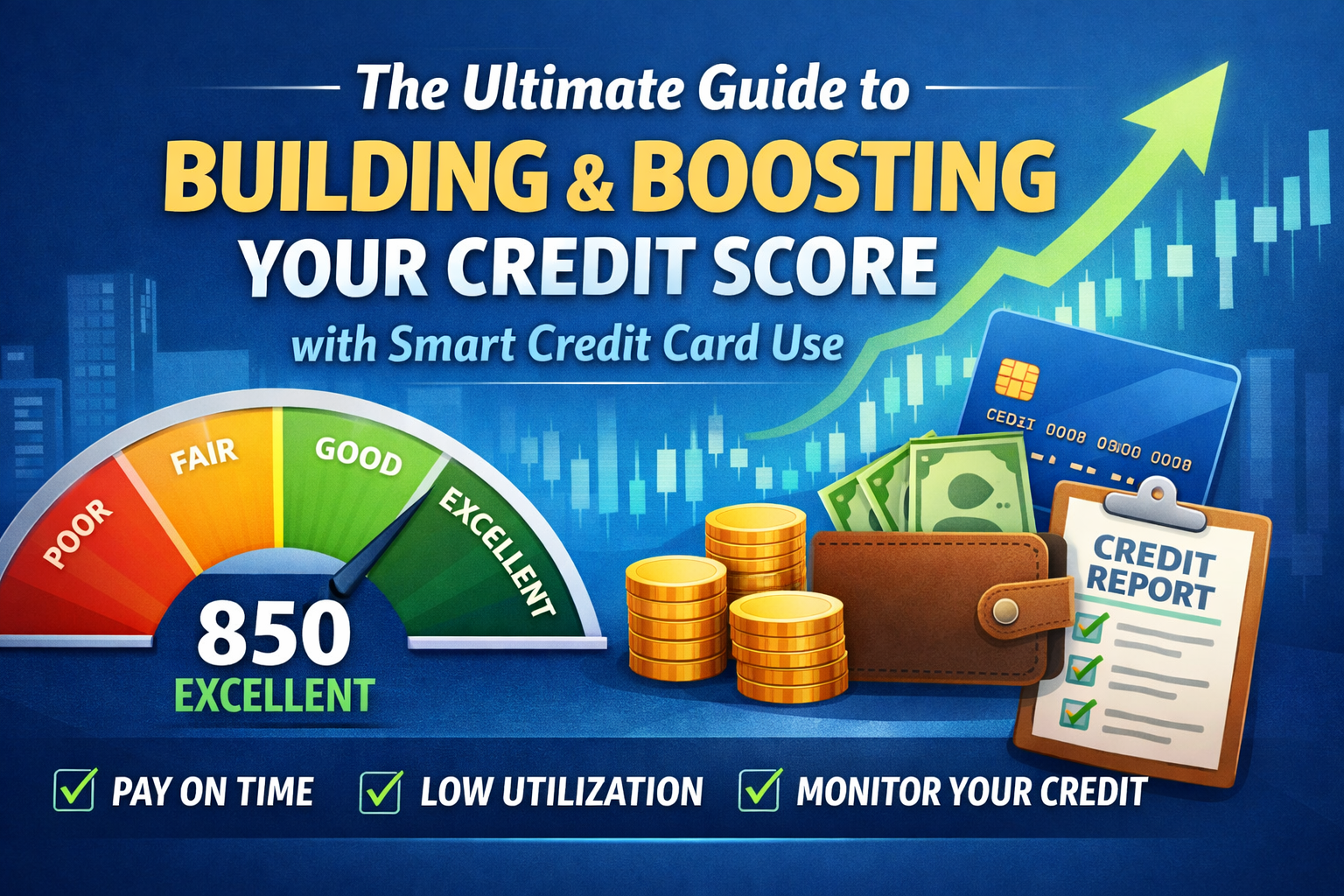
Your credit score can determine whether you get approved for a mortgage, qualify for a car loan, or secure low interest rates on financing. Yet many people don’t realize that smart credit card use is one of the fastest and most effective ways to build and boost a strong credit profile.
In this ultimate guide, you’ll learn how to build credit with credit cards, improve your credit score quickly, avoid common mistakes, and create long-term financial stability.
What Is a Credit Score and Why Does It Matter?
A credit score is a three-digit number that represents your creditworthiness. The most widely used scoring model is the FICO Score, which ranges from 300 to 850.
Here’s a quick breakdown:
- 300–579: Poor
- 580–669: Fair
- 670–739: Good
- 740–799: Very Good
- 800–850: Excellent
Lenders, landlords, insurers, and even some employers may review your credit score to assess financial responsibility.
How Credit Cards Impact Your Credit Score
Credit cards primarily affect four key factors in your credit score:
1. Payment History (35%)
Your payment history is the most important factor. Even one 30-day late payment can significantly drop your score.
Smart Tip:
Set up automatic payments for at least the minimum due every month.
2. Credit Utilization (30%)
Credit utilization measures how much of your available credit you’re using.
Formula:
Balance ÷ Credit Limit = Utilization Percentage
Experts recommend keeping your utilization below 30%, but below 10% is ideal for maximum score growth.
Example:
If your limit is $1,000, try to keep your balance below $100–$300.
3. Length of Credit History (15%)
The longer your accounts stay open, the better. Avoid closing your oldest credit card unless absolutely necessary.
4. Credit Mix (10%)
Having a mix of credit types—such as credit cards, auto loans, or mortgages—can positively influence your score.
Step-by-Step Guide to Building Credit with Credit Cards
Step 1: Choose the Right Starter Card
If you’re new to credit or rebuilding, consider:
- Secured credit cards
- Student credit cards
- Entry-level unsecured cards
Well-known issuers like Capital One and Discover offer beginner-friendly options.
Step 2: Make Small, Strategic Purchases
Use your credit card for:
- Gas
- Subscriptions
- Groceries
Then pay the balance off in full before the statement closes (if possible).
Step 3: Pay On Time — Every Time
Late payments stay on your credit report for up to 7 years. Consistency is everything.
Pro Strategy:
- Set calendar reminders
- Use autopay
- Pay weekly or biweekly to control utilization
Step 4: Keep Balances Low Before the Statement Date
Many people think paying by the due date is enough — but your statement balance is what often gets reported to credit bureaus.
Pay down your balance before the statement closes to show lower utilization.
Step 5: Increase Your Credit Limit (Without Increasing Spending)
After 6–12 months of responsible use, request a credit limit increase.
Higher limit + same spending = lower utilization = potential score boost.
Advanced Strategies to Boost Your Credit Score Faster
Become an Authorized User
If a trusted family member has a well-managed, older account, being added as an authorized user can help strengthen your profile.
Use Multiple Cards Strategically
Instead of maxing out one card, spread balances across multiple cards to keep utilization low on each account.
Monitor Your Credit Regularly
Review your credit reports from:
- Equifax
- Experian
- TransUnion
Check for:
- Errors
- Unauthorized accounts
- Incorrect late payments
Disputing inaccuracies can lead to significant score improvements.
Common Credit Card Mistakes to Avoid
❌ Maxing out cards
❌ Missing payments
❌ Closing old accounts too quickly
❌ Applying for too many cards at once
❌ Only paying the minimum long-term
Avoiding these pitfalls is just as important as following smart strategies.
How Long Does It Take to Build Good Credit?
With consistent smart credit card use:
- 3–6 months: Initial score generation
- 6–12 months: Noticeable improvements
- 12–24 months: Strong, stable credit foundation
Credit building is a marathon, not a sprint.
Frequently Asked Questions
Does carrying a balance help your credit score?
No. You do NOT need to carry a balance and pay interest. Paying in full is best.
How many credit cards should I have?
For most people, 2–4 well-managed credit cards are sufficient.
What is the fastest way to boost a credit score?
Lowering credit utilization and removing errors can deliver the quickest results.
Final Thoughts: Use Credit Cards as a Tool — Not a Trap
Credit cards are powerful financial tools when used responsibly. By focusing on:
- On-time payments
- Low utilization
- Long account history
- Smart credit management
You can steadily build and boost your credit score — unlocking better financial opportunities and long-term wealth building.